When crisis response becomes routine, are we getting better at managing disasters or simply worse at preventing them?
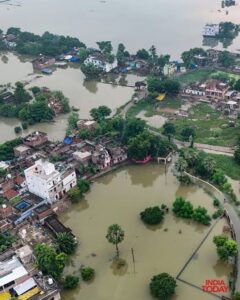
Floods, heatwaves, fires, disease outbreaks, energy shocks and geopolitical conflicts increasingly dominate the news cycle. Governments respond with emergency measures, advisories, relief packages and temporary restrictions. Such responses are necessary when a crisis strikes. But a more uncomfortable question deserves attention: what happens when emergency management becomes a permanent feature of normal life?
Take urban flooding. If the same roads and neighbourhoods flood every monsoon, rescuing people and distributing relief is essential. But it cannot be the whole answer. Drainage, land-use planning, floodplains and water storage require action long before the rain arrives. A government that responds quickly to a predictable crisis is doing its job; a government that repeatedly has to respond to the same crisis needs to ask harder questions.

The same is true of environmental pollution. Delhi-NCR, Lucknow and several other major cities do not suddenly become polluted overnight; they repeatedly enter periods of hazardous air year after year. Restrictions are imposed, schools may close, construction is curtailed and emergency measures are announced. But if citizens are breathing unhealthy air every winter, should air pollution still be treated as an emergency or should it be treated as a failure of long-term planning and prevention?

The same principle applies to extreme heat, energy shortages and other recurring disruptions. We have become increasingly good at response: warnings are issued, control rooms activated, rescue teams deployed and relief announced. But prevention is quieter and less visible. It does not make headlines because its greatest success is an event that never happens.
Perhaps this is the real test of modern governance. Are we becoming better at handling emergencies or are we simply becoming accustomed to living with them?
A resilient society is not one that knows how to survive every crisis. It is one that learns enough from each crisis to prevent the one from becoming inevitable.
Write up by Vikas Chandra Agrawal