Nandan Nilekani का AI Prediction: क्या Future की Jobs बड़ी Companies नहीं, Small Businesses बनाएंगे?
Location: New Delhi, India
Artificial Intelligence को लेकर सबसे बड़ा सवाल सिर्फ यह नहीं है कि AI कितनी jobs खत्म करेगा। असली सवाल यह है कि AI के बाद नई jobs आएंगी कहां से?
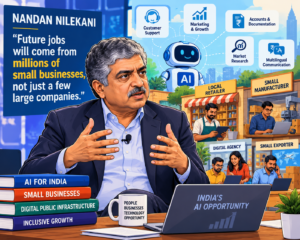
Infosys के Chairman और co-founder Nandan Nilekani ने इस सवाल का एक अलग perspective दिया है। उनके मुताबिक India की future employment story शायद कुछ बड़ी companies के लाखों लोगों को hire करने से नहीं, बल्कि millions of small businesses के छोटे-छोटे teams बनाने से आगे बढ़ेगी।
October 2026 में Bloomberg New Economy Forum में बोलते हुए Nilekani ने कहा कि India AI को बड़े scale पर diffuse और deliver करने में leader बन सकता है। उनका focus सबसे powerful AI model बनाने से ज्यादा इस बात पर है कि AI को millions of businesses और लोगों तक practically पहुंचाया जाए।
AI Jobs खत्म करेगा या Jobs का Model बदलेगा?
AI को लेकर global debate काफी polarized हो चुकी है।
एक तरफ automation को लेकर concern है कि coding, customer support, documentation और दूसरे repetitive tasks तेजी से AI संभाल सकता है।
दूसरी तरफ Nilekani का argument है कि AI केवल existing jobs को replace नहीं करेगा, बल्कि businesses को नए तरीके से operate करने के लिए मजबूर करेगा।
उन्होंने AI से बड़े स्तर पर job destruction की predictions को काफी dismissive तरीके से “hogwash” बताया और कहा कि enterprise transformation में coding केवल एक हिस्सा है।
उनके अनुसार typical technology project में technology लगभग 30% हिस्सा हो सकती है, जबकि बाकी हिस्सा governance, change management, business requirements, transformation और guardrails जैसे कामों से जुड़ा होता है।
यानी AI code लिख सकता है, लेकिन business को यह तय करना होगा कि क्या बनाना है, क्यों बनाना है और उसे safely कैसे operate करना है।
Small Businesses क्यों बन सकते हैं Future Job Creators?
Nilekani की सबसे interesting prediction यहीं आती है।
उनके मुताबिक 3–5 लोगों वाली small businesses कई तरह के complex tasks एक साथ करती हैं। ऐसे काम पूरी तरह standardised नहीं होते, इसलिए उन्हें बड़े enterprises की तरह आसानी से automate करना मुश्किल हो सकता है।
AI इन businesses को replace करने के बजाय उनकी productivity बढ़ा सकता है।
उदाहरण के लिए एक छोटा business AI की मदद से:
- customer support automate कर सकता है
- marketing content तैयार कर सकता है
- accounts और documentation संभाल सकता है
- नए customers तक पहुंच सकता है
- market research कर सकता है
- multilingual communication कर सकता है
- AI agents के जरिए repetitive digital work कर सकता है
अगर technology एक small business को 3 लोगों से 5 लोगों की team तक grow करने में मदद करती है, तो लाखों businesses में यही छोटा expansion मिलकर बड़े employment numbers पैदा कर सकता है।
Nilekani का argument है कि future में employment का model “few large companies hiring millions” से “millions of small companies hiring a few people each” की तरफ जा सकता है।
India के लिए यह Model इतना Important क्यों है?
India की सबसे बड़ी economic strengths में से एक उसका enormous small-business ecosystem है।
हर शहर और कस्बे में छोटे retailers, manufacturers, agencies, restaurants, service providers, traders और startups मौजूद हैं।
Problem यह है कि इनमें से बहुत से businesses के पास large companies जैसी technology teams, data scientists या expensive consultants नहीं होते।
अगर AI tools affordable और easy-to-use हो जाते हैं, तो यह gap काफी हद तक कम हो सकता है।
एक small manufacturer AI से inventory analyse कर सकता है।
एक local retailer demand forecasting कर सकता है।
एक digital agency multiple clients के लिए AI-assisted workflows चला सकती है।
एक small exporter international customers के साथ multilingual communication कर सकता है।
यानी AI का सबसे बड़ा economic impact शायद केवल Silicon Valley-style companies में नहीं, बल्कि ordinary businesses की productivity बढ़ाने में दिखाई दे।
India को सबसे Powerful AI Model बनाना जरूरी है?
Nilekani का vision यहां traditional AI race से थोड़ा अलग है।
उनके अनुसार India की सबसे बड़ी opportunity जरूरी नहीं कि दुनिया का सबसे powerful foundation model बनाने में हो। Opportunity यह भी है कि AI को population scale पर deploy और diffuse किया जाए।
यह approach India के Digital Public Infrastructure experience से जुड़ती है।
Aadhaar, UPI और open digital networks ने दिखाया है कि technology को massive scale पर deploy किया जा सकता है।
अब सवाल है:
क्या India इसी philosophy को AI के साथ दोहरा सकता है?
अगर AI tools millions of entrepreneurs तक पहुंचते हैं, तो इसका impact केवल technology sector तक सीमित नहीं रहेगा।
Indian IT Industry के लिए भी बड़ा बदलाव
Nilekani की prediction traditional Indian IT business model के लिए भी important है।
Infosys, TCS और दूसरी IT services companies का traditional model largely software development और engineering talent पर आधारित रहा है।
लेकिन AI coding और routine software development को increasingly automate कर रहा है।
इसका मतलब यह नहीं कि IT services की जरूरत खत्म हो जाएगी।
Nilekani का argument इसके उलट है—AI adoption के कारण companies को अपने entire business operations को transform करना पड़ेगा और इसके लिए IT companies की जरूरत बढ़ सकती है।
Future IT jobs में सिर्फ coding नहीं होगी।
Demand बढ़ सकती है:
AI orchestration
AI governance
Change management
Client consulting
AI safety
Agent supervision
Business transformation
Cybersecurity
यानी employee का role “code लिखने वाले engineer” से “AI-powered business problem solver” की तरफ shift हो सकता है।
AI Agents Small Businesses के लिए Game Changer क्यों हो सकते हैं?
Agentic AI इस entire prediction को और interesting बनाता है।
एक small business owner को हर task के लिए अलग employee रखने की जरूरत कम हो सकती है अगर AI agents routine digital work संभालने लगें।
एक agent customer queries देख सकता है।
दूसरा lead qualification कर सकता है।
तीसरा reports तैयार कर सकता है।
चौथा marketing workflow manage कर सकता है।
लेकिन इसका मतलब यह नहीं कि humans की जरूरत खत्म हो जाएगी।
बल्कि business owner को ऐसे लोगों की जरूरत हो सकती है जो AI systems को supervise करें, customers को समझें और complex decisions लें।
Nilekani ने भी AI के साथ governance और guardrails की importance पर जोर दिया है, खासकर यह सुनिश्चित करने के लिए कि AI systems hallucinate या uncontrolled तरीके से operate न करें।
लेकिन क्या Small Businesses सच में बड़े Job Creators बन पाएंगे?
यहीं सबसे बड़ा uncertainty factor है।
Nilekani का vision opportunity को highlight करता है, लेकिन इसे automatic outcome नहीं माना जा सकता।
Small businesses को growth के लिए सिर्फ AI नहीं चाहिए।
उन्हें चाहिए:
Capital
Customers
Digital infrastructure
Skilled workers
Easy regulations
Market access
Reliable technology
अगर AI productivity तो बढ़ा दे लेकिन small businesses को finance या market access न मिले, तो employment growth limited रह सकती है।
इसलिए AI को job creation engine बनाने के लिए technology के साथ broader economic reforms भी जरूरी होंगे।
बड़े Corporates का Future क्या होगा?
AI का दूसरा side यह है कि large companies automation से काफी productivity gains हासिल कर सकती हैं।
यही वजह है कि AI का impact employment पर uneven हो सकता है।
कुछ large enterprises कम लोगों के साथ ज्यादा output produce कर सकते हैं।
दूसरी तरफ small businesses AI की मदद से नए markets में enter कर सकते हैं और धीरे-धीरे अपनी teams बढ़ा सकते हैं।
इससे employment का balance traditional corporate sector से entrepreneurial ecosystem की तरफ shift होने की संभावना बन सकती है।
Nilekani ने पहले भी कहा है कि large corporations automation के कारण future में net job losers हो सकती हैं, जबकि small enterprises ज्यादा resilient रहकर employment create कर सकती हैं।
India का AI Advantage: Scale
India के पास एक unique advantage है—scale।
यहां एक साथ करोड़ों consumers, लाखों businesses और large digital infrastructure मौजूद है।
अगर AI tools:
- affordable हों,
- Indian languages support करें,
- easy-to-use हों,
- trusted हों,
- और existing digital networks से connect हो सकें,
तो adoption बहुत तेजी से फैल सकता है।
Nilekani का argument यही है कि India को केवल AI बनाने की race में नहीं, बल्कि AI को millions of users तक पहुंचाने की race में leadership हासिल करनी चाहिए।
सबसे बड़ा बदलाव Jobs में नहीं, Entrepreneurship में हो सकता है
AI की सबसे interesting possibility शायद यह है कि यह एक व्यक्ति को भी छोटे business को operate करने की ज्यादा क्षमता दे सकता है।
आज एक entrepreneur को marketing, accounting, customer support, research और operations के लिए अलग-अलग resources की जरूरत पड़ती है।
कल इनमें से कई functions AI-assisted हो सकते हैं।
इसका मतलब हो सकता है कि एक व्यक्ति पहले की तुलना में ज्यादा बड़ा business operate कर सके।
और जब business grow होगा, तो AI के बावजूद human employees की जरूरत भी बढ़ सकती है।
यही Nilekani के vision का core है:
AI जरूरी नहीं कि सिर्फ jobs हटाए। AI नए businesses को जन्म देकर नई jobs भी create कर सकता है।
Conclusion: AI का Future “Less Jobs” नहीं, “Different Jobs” हो सकता है
Nandan Nilekani की prediction AI और employment debate को एक अलग direction देती है।
उनके मुताबिक India का opportunity सबसे powerful AI model बनाने से ज्यादा AI को population और business scale पर deploy करने में हो सकता है।
अगर millions of small businesses AI को effectively adopt करते हैं, तो वे productivity बढ़ाने के साथ नए customers, नए markets और eventually नई jobs create कर सकते हैं।
लेकिन इसके लिए सिर्फ AI tools पर्याप्त नहीं होंगे।
India को entrepreneurship, capital access, digital infrastructure, skills और business-friendly policies को भी मजबूत करना होगा।
क्योंकि आने वाली economy में शायद सबसे बड़ा सवाल यह नहीं होगा कि:
“AI कितनी jobs replace करेगा?”
बल्कि सवाल होगा:
“AI की मदद से कितने नए businesses पैदा होंगे—और वे कितने लोगों को रोजगार देंगे?”
अगर Nilekani का vision सही साबित होता है, तो India का AI revolution केवल technology revolution नहीं होगा।
यह employment और entrepreneurship का भी नया model बन सकता है।