Delhi Pollution का असली Source कौन? नई IITM Lab ने PM2.5 के Sources का Data क्या बताया?
Location: New Delhi
हर साल October-November आते ही Delhi की हवा पर एक familiar debate शुरू हो जाती है—vehicles, stubble burning, dust या fireworks में से आखिर सबसे बड़ा culprit कौन है?
लेकिन इस बार Delhi-NCR में pollution debate को सिर्फ AQI numbers और आरोप-प्रत्यारोप से आगे ले जाने की कोशिश की जा रही है।
24 October 2026 को Indian Institute of Tropical Meteorology (IITM) की Delhi branch में Integrated Atmospheric Chemistry and Aerosol Toxicity Analysis Laboratory यानी AATAL का inauguration हुआ। यह facility pollution की सिर्फ मात्रा नहीं, बल्कि उसकी composition, संभावित sources और toxicity को real time में analyse करने के लिए बनाई गई है।
और शुरुआती data ने एक interesting picture सामने रखी है।
क्या Vehicles Delhi Pollution का सबसे बड़ा Source हैं?
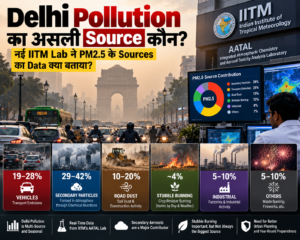
AATAL के inauguration के दौरान monitoring screen पर transport का contribution करीब 25% दिखा, जब pollution level लगभग 180 था।
इसका मतलब यह नहीं है कि पूरे season में Delhi के PM2.5 का exactly 25% हिस्सा vehicles से ही आता है। यह एक specific point-in-time snapshot था।
फिर भी यह figure important है क्योंकि यह दिखाता है कि vehicular emissions Delhi की air pollution problem में लगातार महत्वपूर्ण factor बने हुए हैं।
नई laboratory का उद्देश्य इसी तरह के source information को ज्यादा systematic और real-time तरीके से उपलब्ध कराना है।
लेकिन कहानी सिर्फ Vehicles की नहीं है
AATAL के शुरुआती measurements ने pollution की complexity को और interesting बना दिया।
20 से 24 October के preliminary estimates के analysis में secondary particles PM2.5 का लगभग 29% से 42% हिस्सा रहे, जबकि vehicles का share करीब 19% से 28% के बीच रहा।
यही Delhi pollution debate का शायद सबसे important हिस्सा है।
Secondary aerosols सीधे किसी vehicle या chimney से particle के रूप में बाहर नहीं निकलते।
वे atmosphere में अलग-अलग gases और chemical compounds की reactions के बाद बन सकते हैं।
यानी pollution का एक बड़ा हिस्सा ऐसा हो सकता है जिसका original source Delhi की सड़क पर दिखाई ही न दे।
Secondary Aerosols क्या होते हैं?
इसे simple language में समझें।
मान लीजिए किसी source से gases atmosphere में release हुईं।
इन gases की chemical reactions sunlight, temperature, humidity और दूसरे atmospheric compounds के साथ होती हैं।
इसके बाद नए particulate matter बन सकते हैं।
इन्हें broadly secondary aerosols कहा जाता है।
इनमें secondary organic aerosols और secondary inorganic aerosols शामिल हो सकते हैं। IITM scientists के मुताबिक इनके original sources को पूरी तरह identify करना अभी भी चुनौती है।
यही कारण है कि Delhi pollution को सिर्फ “किसने कितना धुआं छोड़ा” के सवाल से समझना मुश्किल है।
फिर Stubble Burning कहां आता है?
यहीं सबसे बड़ा misconception पैदा होता है।
हर साल Delhi की खराब हवा के लिए stubble burning को लेकर intense political debate होती है।
लेकिन pollution contribution दिन, मौसम, wind direction और atmospheric conditions के साथ बदलता रहता है।
उदाहरण के लिए 21 October के आसपास IITM के Decision Support System के estimates में transport लगभग 21% और stubble burning करीब 4% था। वहीं forecast के अनुसार farm-fire contribution अगले दिनों में बढ़ने की संभावना थी।
इसका मतलब है कि stubble burning important है, लेकिन हर समय Delhi pollution का सबसे बड़ा source मानना scientifically सही नहीं होगा।
Delhi Pollution में Road Dust भी बड़ा Factor
Vehicles और secondary aerosols के अलावा road dust, soil dust और construction activity भी Delhi की air quality को प्रभावित करते हैं।
पुराने और नए studies में dust contribution season के हिसाब से काफी बदलता रहा है।
एक recent analysis के मुताबिक warm months में soil और road dust प्रमुख contributors में रहे, जबकि winter में secondary particles, biomass burning और vehicles की भूमिका ज्यादा महत्वपूर्ण रही।
यानी Delhi का pollution एक single-source problem नहीं है।
यह एक multi-source और seasonal problem है।
तो क्या “Delhi vs Stubble Burning” Debate गलत है?
पूरी तरह नहीं।
Stubble burning का contribution real है और satellite observations तथा atmospheric models इसके प्रभाव को track करते हैं।
लेकिन problem यह है कि public debate अक्सर इसे binary बना देती है:
Delhi pollution = local vehicles
या
Delhi pollution = Punjab-Haryana stubble burning
असल science इससे ज्यादा complicated है।
Delhi-NCR एक connected airshed है। Pollution हवा के साथ neighbouring regions से move कर सकता है, जबकि Delhi के अंदर transport, industry, dust, waste burning और अन्य sources भी लगातार emissions generate करते हैं।
2026 में CAQM के expert assessment ने भी PM2.5 को Delhi की air quality का प्रमुख pollutant बताया और local emissions के साथ regional/transboundary pollution movement की भूमिका पर जोर दिया।
AATAL Lab क्यों महत्वपूर्ण है?
AATAL का सबसे बड़ा फायदा यह हो सकता है कि pollution policy को real-time evidence से जोड़ने में मदद मिले।
Laboratory अलग-अलग sources को distinguish करने की कोशिश करेगी, जिसमें:
- Vehicular emissions
- Industrial activity
- Biomass और crop-residue burning
- Construction और road dust
- Regional pollution transport
शामिल हैं।
इसके साथ laboratory को IITM के AIRWISE system से integrate किया गया है, जो pollution forecasting और decision support में इस्तेमाल होता है।
AIRWISE अगले 72 hours के लिए करीब 400-metre spatial resolution पर air-quality forecasts देने में सक्षम है।
अगर source data और forecasting effectively combine होते हैं, तो authorities theoretically यह decide कर सकती हैं कि किसी particular day पर किस source के खिलाफ action ज्यादा जरूरी है।
लेकिन AATAL के शुरुआती Data की Limitations भी हैं
यहां caution जरूरी है।
AATAL अभी नई facility है और शुरुआती data को final answer नहीं माना जाना चाहिए।
Hindustan Times के analysis के मुताबिक 20–24 October के शुरुआती measurements में secondary pollution का बड़ा हिस्सा identify हुआ, लेकिन scientists अभी यह पूरी तरह नहीं बता पा रहे हैं कि इन secondary particles के original sources क्या हैं।
इसके अलावा laboratory के शुरुआती PM2.5 readings और Delhi के conventional monitoring stations के बीच भी differences देखे गए।
IITM officials ने इसे facility के शुरुआती operational phase और “teething issues” से जोड़ा है।
इसलिए AATAL का data बेहद useful हो सकता है, लेकिन इसे लगातार validate और refine करना जरूरी होगा।
एक और बड़ी समस्या: पुराना Emissions Data
Delhi pollution forecasting का एक हिस्सा पुराने emissions inventory पर भी निर्भर करता है।
Hindustan Times के मुताबिक IITM के forecasting model में इस्तेमाल होने वाला emissions estimate पुराने surveys पर आधारित है और updated inventory की जरूरत है। Replacement baseline को 2027 में update किए जाने की उम्मीद बताई गई है।
यह महत्वपूर्ण है क्योंकि पिछले एक दशक में Delhi में कई चीजें बदली हैं:
Fuel standards बदले हैं।
Vehicles बदले हैं।
Industrial patterns बदले हैं।
Coal-based infrastructure में बदलाव आया है।
Construction और urbanisation बढ़े हैं।
अगर source data पुराना है, तो model की accuracy पर भी असर पड़ सकता है।
क्या नया Data Pollution Policy बदल सकता है?
यही AATAL का सबसे बड़ा test होगा।
मान लीजिए किसी particular day पर transport dominant contributor है।
तो authorities vehicle restrictions, traffic management और public transport measures को ज्यादा aggressively target कर सकती हैं।
अगर biomass burning contribution बढ़ता है, तो regional coordination और farm-fire management ज्यादा important हो सकता है।
अगर dust dominant है, तो construction और road-dust control ज्यादा जरूरी होगा।
यानी future में सवाल सिर्फ यह नहीं होगा:
“AQI कितना है?”
बल्कि:
“AQI खराब क्यों है?”
और यही difference pollution policy को ज्यादा targeted बना सकता है।
Delhi की Pollution Story में अब Science vs Politics नहीं, Science + Policy चाहिए
Delhi की air pollution अक्सर political blame game में फंस जाती है।
एक side vehicles को blame करती है।
दूसरी side stubble burning को।
कहीं construction आता है, कहीं fireworks।
लेकिन air pollution atmosphere में एक complex chemical और meteorological process है।
एक source को completely eliminate किए बिना भी दूसरे sources pollution levels को high रख सकते हैं।
इसलिए long-term solution के लिए multiple sources पर simultaneous action जरूरी है।
क्या AATAL Delhi को Pollution-Free बना सकता है?
नहीं।
Laboratory खुद pollution कम नहीं करेगी।
यह information infrastructure है।
इसका काम authorities और scientists को बेहतर data देना है ताकि वे तय कर सकें कि pollution किस source से कितना आ रहा है और किस intervention का impact सबसे ज्यादा हो सकता है।
असल success इस बात से तय होगी कि इस data को policy में कितनी तेजी और accuracy से translate किया जाता है।
अगर source data available है लेकिन enforcement नहीं है, तो technology का फायदा सीमित रहेगा।
Conclusion: Delhi Pollution का जवाब अब एक Source नहीं, पूरा System है
नई AATAL laboratory ने Delhi pollution debate को एक महत्वपूर्ण direction दी है।
शुरुआती data यह संकेत देता है कि vehicles important हैं, लेकिन कहानी सिर्फ vehicles की नहीं है।
Secondary aerosols, dust, biomass burning, industry और regional pollution transport सभी अलग-अलग परिस्थितियों में महत्वपूर्ण भूमिका निभा सकते हैं।
इसलिए “Delhi Pollution vs Stubble Burning” जैसी binary debate से आगे बढ़कर अब सवाल होना चाहिए:
किस दिन कौन-सा source कितना contribute कर रहा है?
और उससे भी महत्वपूर्ण:
क्या government उस real-time information के आधार पर उसी source पर तुरंत action ले रही है?
अगर AATAL और AIRWISE reliable, continuously updated और transparent source data देने में सफल होते हैं, तो Delhi की pollution policy reactive होने के बजाय evidence-based और source-specific हो सकती है।
लेकिन फिलहाल इसे final verdict नहीं, बल्कि Delhi की air-quality science में एक promising new chapter समझना ज्यादा सही होगा।