Cyber Crime से कैसे बचें? Online Shopping, Banking और Social Media Users के लिए जरूरी Tips
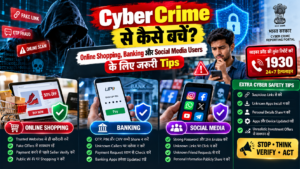
आज Internet हमारी daily life का एक जरूरी हिस्सा बन चुका है। Online Shopping से लेकर Banking, UPI Payments, Social Media, Work और Education तक, लगभग हर काम digital हो गया है।
लेकिन digital convenience के साथ Cyber Crime और Online Fraud का risk भी बढ़ा है।
Fake shopping websites, phishing links, fake customer care numbers, OTP scams, UPI fraud, social media hacking, fake profiles, investment scams और identity theft जैसे तरीकों से लोगों को target किया जाता है।
सबसे बड़ी समस्या यह है कि cyber fraud हमेशा किसी complicated hacking technique से नहीं होता। कई बार fraudster सिर्फ एक fake message, phone call या convincing website के जरिए user से sensitive information हासिल कर लेता है।
इसलिए आज के समय में Cyber Safety केवल IT professionals की जरूरत नहीं है। हर Internet user को basic cyber security rules पता होने चाहिए।
Cyber Crime क्या है?
Cyber Crime ऐसा अपराध है जिसमें computer, smartphone, Internet, online account या digital network का इस्तेमाल किया जाता है।
इसमें financial fraud के अलावा कई तरह के crimes शामिल हो सकते हैं:
- Online Banking Fraud
- UPI Fraud
- Credit/Debit Card Fraud
- Phishing
- Identity Theft
- Social Media Hacking
- Fake Social Media Accounts
- Online Shopping Fraud
- Investment Scam
- Job Scam
- Malware और malicious links
- Cyber Stalking
- Data Theft
- Digital Arrest Scam
भारत सरकार का National Cyber Crime Reporting Portal cybercrime complaints और suspect identifiers report करने की सुविधा देता है। Citizens suspected mobile numbers, email IDs, URLs और दूसरे identifiers को भी check/report कर सकते हैं।
Online Fraud के सबसे Common तरीके
Cyber criminals लगातार नए तरीके इस्तेमाल करते हैं, लेकिन कुछ scams बार-बार सामने आते हैं।
1. Fake Online Shopping Website
Fraudsters attractive offers दिखाकर fake shopping websites या social media stores बना सकते हैं।
उदाहरण:
₹4,999 का Product — सिर्फ ₹999
User payment करता है, लेकिन:
- Product deliver नहीं होता
- Fake product मिलता है
- Website बंद हो जाती है
- Customer support number काम नहीं करता
कैसे बचें?
Shopping करने से पहले:
- Website का domain check करें
- Seller की authenticity verify करें
- बहुत ज्यादा discount से सावधान रहें
- Unknown websites पर card details save न करें
- Payment से पहले reviews और seller information check करें
2. Fake Customer Care Scam
कई users Google या Social Media पर customer care number search करते हैं।
Fraudster fake customer-care number publish कर सकता है।
Call करने पर वह कह सकता है:
“आपका refund process करना है।”
“आपका account verify करना है।”
“Remote support application install करें।”
इसके बाद sensitive information या device access हासिल करने की कोशिश की जा सकती है।
Safety Rule
Customer care number हमेशा company की official website या official app से verify करें।
Search result में दिखाई देने वाले random phone numbers पर blindly trust न करें।
3. OTP और Banking Fraud
Fraudster bank employee या payment company representative बनकर call कर सकता है।
वह कह सकता है:
- KYC update करना है
- Account बंद होने वाला है
- Card block हो जाएगा
- Refund process करना है
- Reward मिला है
- Account verification जरूरी है
इसके बाद OTP, PIN या login details मांगने की कोशिश की जा सकती है।
याद रखें:
OTP, PIN, CVV, password और banking credentials किसी unknown व्यक्ति के साथ share न करें।
अगर कोई व्यक्ति phone पर urgency create कर रहा है, तो पहले call disconnect करें और संबंधित organization से official channel के जरिए contact करें।
4. UPI और QR Code Scam
UPI ने payments को बहुत आसान बनाया है, लेकिन users को payment request और payment receive करने के बीच का difference समझना जरूरी है।
किसी व्यक्ति द्वारा यह कहना:
“Payment receive करने के लिए QR scan करें।”
हमेशा सही नहीं होता।
किसी QR code को scan करने या payment request approve करने से पहले screen पर दिखाई गई information carefully check करें।
Golden Rule:
पैसे receive करने के लिए किसी unknown person की payment request blindly approve न करें।
5. Fake Payment Screenshot
Online sellers और small businesses के साथ एक common problem fake payment screenshot हो सकती है।
Customer कहता है:
“Payment कर दिया है, screenshot देख लीजिए।”
लेकिन screenshot edited या fake हो सकता है।
Business Owners के लिए Safety Tip
Payment screenshot पर भरोसा करने के बजाय अपने:
- Bank account
- UPI app
- Payment gateway
- Transaction history
में actual payment verify करें।
6. Phishing Link Scam
Phishing में fraudster fake link भेजकर user को ऐसी website पर ले जाने की कोशिश करता है जो real website जैसी दिखाई दे सकती है।
Message में लिखा हो सकता है:
“Your account will be blocked.”
“KYC expired.”
“Package delivery failed.”
“Click here for refund.”
Link खोलने के बाद login details या payment information मांगी जा सकती है।
Government cyber-safety guidance भी unknown emails, text messages या social media से आए suspicious links और attachments पर click न करने की सलाह देती है।
क्या करें?
अगर message suspicious लगे:
Click मत करें → Verify करें → फिर Action लें।
7. Social Media Account Hacking
Instagram, Facebook, X और अन्य social platforms भी cyber criminals के target हो सकते हैं।
Account compromise होने के बाद fraudster:
- आपके contacts को message कर सकता है
- पैसे मांग सकता है
- Fake links भेज सकता है
- Personal information misuse कर सकता है
- Fake posts कर सकता है
Social Media Account को कैसे सुरक्षित रखें?
- Strong password रखें
- हर important account के लिए अलग password रखें
- Two-factor authentication enable करें
- Unknown login alerts को seriously लें
- Suspicious third-party apps की access remove करें
- Unknown friend requests accept करने से बचें
I4C की cyber-safety guidance social media privacy settings मजबूत रखने और strangers की friend requests को लेकर सावधानी बरतने की सलाह देती है।
8. Fake Social Media Profile
किसी व्यक्ति के नाम और photo से fake account बनाया जा सकता है।
Fraudster फिर उसके friends या followers को message करके पैसे मांग सकता है।
अगर आपके नाम से Fake Account बने
तुरंत:
- Profile का screenshot लें
- Account को platform पर report करें
- अपने contacts को inform करें
- किसी financial fraud की कोशिश हुई हो तो cybercrime complaint करें
9. Investment और Trading Scam
Cyber criminals fake investment opportunities भी promote कर सकते हैं।
उदाहरण:
“₹10,000 लगाइए और ₹50,000 कमाइए।”
“Guaranteed Daily Profit.”
“Exclusive Trading Group.”
ऐसे scams WhatsApp, Telegram, Social Media advertisements और fake trading applications के जरिए भी चलाए जा सकते हैं।
I4C ने fake investment/trading applications और unrealistic returns वाले schemes के बारे में users को सावधान किया है।
Golden Rule
Guaranteed high returns = Red Flag
Investment से पहले संबंधित company, platform और regulatory registration को independently verify करें।
Online Shopping करते समय Cyber Safety Tips
Online shopping के दौरान इन rules को follow करें:
1. Website URL check करें
Spelling में छोटे बदलाव भी fake website का संकेत हो सकते हैं।
2. Unrealistic discount से सावधान रहें
अगर deal market price से बहुत ज्यादा सस्ती है, तो पहले verify करें।
3. Seller information देखें
Business name, contact details, return policy और other information check करें।
4. Public Wi-Fi पर payment avoid करें
Sensitive shopping या banking activities trusted device और network से करना safer approach है। I4C भी banking/shopping के लिए trusted device/network इस्तेमाल करने की सलाह देता है।
5. Payment confirmation verify करें
Payment के बाद actual transaction status check करें।
Banking Users के लिए जरूरी Cyber Safety Rules
Banking में छोटी गलती भी financial loss का कारण बन सकती है।
इसलिए:
- OTP share न करें
- ATM PIN share न करें
- CVV share न करें
- Net banking password share न करें
- Banking credentials किसी caller को न दें
- Unknown APK install न करें
- Suspicious links से banking website न खोलें
- Public computer से banking avoid करें
- Mobile banking apps updated रखें
- Bank alerts को ध्यान से पढ़ें
सबसे जरूरी बात
Bank employee होने का दावा करने वाला व्यक्ति भी OTP, PIN या password मांगता है तो information share न करें।
पहले official bank channel से verify करें।
Smartphone को कैसे Secure रखें?
आज smartphone में हमारी लगभग पूरी digital identity होती है।
इसमें:
- Banking apps
- UPI
- Social Media
- Photos
- Documents
- Contacts
- Password managers
हो सकते हैं।
इसलिए smartphone security बहुत जरूरी है।
Basic Checklist
- Strong screen lock रखें
- Fingerprint/biometric enable करें
- Operating system update रखें
- Apps केवल trusted sources से install करें
- Unused apps remove करें
- Unknown APK install न करें
- App permissions review करें
- Important data का backup रखें
I4C की guidance भी software और operating system को updated रखने तथा applications को trusted sources से install करने की सलाह देती है।
Social Media Users के लिए Privacy Tips
Social Media पर हर information publicly share करना जरूरी नहीं है।
Avoid sharing:
- Personal phone number
- Home address
- Financial information
- Banking details
- OTP
- Travel plans
- Important documents
- Sensitive personal photos
Privacy settings को periodically review करें।
Location sharing भी जरूरत के अनुसार ही रखें।
I4C की safety guidance users को personal information और location-related data को strangers के साथ share करने में सावधानी बरतने की सलाह देती है।
Cyber Crime से बचने का सबसे आसान Formula
एक simple formula याद रखें:
STOP → THINK → VERIFY → ACT
STOP
अचानक आए message या call पर तुरंत action न लें।
THINK
क्या यह genuinely जरूरी है?
VERIFY
Official website/app/customer support से information verify करें।
ACT
Verification के बाद ही payment, login या information sharing करें।
I4C की advisories भी suspicious situations में identity verify करने और पैसे transfer करने से पहले relatives/friends से बात करने की सलाह देती हैं।
अगर Cyber Fraud हो जाए तो क्या करें?
अगर आपके साथ financial cyber fraud हो गया है तो panic न करें।
सबसे important है कि जल्दी report करें।
Step 1: तुरंत 1930 पर Call करें
भारत में cyber financial fraud की immediate reporting के लिए 1930 Cyber Crime Helpline उपलब्ध है और यह 24×7 service के रूप में listed है।
Step 2: National Cyber Crime Reporting Portal पर Complaint करें
Official portal:
cybercrime.gov.in
यह Government of India के Ministry of Home Affairs के तहत National Cyber Crime Reporting Portal है।
Step 3: Bank/Payment Provider को Inform करें
जिस bank, card या payment service से transaction हुआ है, उसे तुरंत inform करें।
Step 4: Evidence सुरक्षित रखें
इन चीजों को delete न करें:
- Transaction ID
- Screenshots
- SMS
- Emails
- Phone numbers
- WhatsApp chats
- Social media profile URLs
- Payment details
- Fraudster के messages
Step 5: Passwords बदलें
अगर account credentials compromise होने की संभावना है, तो trusted device से passwords बदलें और two-factor authentication enable करें।
Cyber Fraud में क्या नहीं करना चाहिए?
Fraud होने के बाद भी कई लोग दूसरी गलती कर देते हैं।
इनसे बचें:
“आपका पैसा वापस दिला देंगे” कहने वाले strangers पर भरोसा न करें।
Recovery Agent के नाम पर दोबारा payment न करें।
OTP दोबारा share न करें।
Remote Access App install न करें।
Fraudster द्वारा भेजे गए links पर दोबारा click न करें।
Cybercrime complaint के नाम पर आने वाले fake calls/emails से भी सावधान रहें। I4C ने officials का नाम इस्तेमाल करके भेजे जा रहे fake emails के बारे में alert जारी किया है।
Families और Parents के लिए Cyber Safety Tips
Children और teenagers भी cybercrime का target बन सकते हैं।
Parents को:
- Privacy settings समझानी चाहिए
- Unknown friend requests के बारे में awareness देनी चाहिए
- Suspicious links से बचना सिखाना चाहिए
- Online strangers के साथ personal information share न करने की सलाह देनी चाहिए
- Cyber bullying और stalking के बारे में खुलकर बात करनी चाहिए
- बच्चों के devices में appropriate security settings रखनी चाहिए
I4C की guidance parents को children के साथ grooming, bullying और stalking जैसे online risks पर बातचीत करने और clear internet-use guidelines बनाने की सलाह देती है।
Cyber Safety के लिए 15 Golden Rules
- OTP कभी share न करें।
- UPI PIN किसी को न बताएं।
- Unknown links पर click न करें।
- Unknown APK install न करें।
- Fake customer-care numbers से सावधान रहें।
- Public Wi-Fi पर sensitive banking avoid करें।
- Strong और unique passwords रखें।
- Two-factor authentication enable करें।
- Social Media privacy settings check करें।
- Unknown friend requests को blindly accept न करें।
- Unrealistic investment returns से सावधान रहें।
- Payment screenshot के बजाय actual transaction verify करें।
- Smartphone और apps updated रखें।
- Suspicious calls पर पहले verification करें।
- Fraud होने पर तुरंत 1930 और official cybercrime portal का इस्तेमाल करें।
Cyber Safety सिर्फ Technology नहीं, Awareness भी है
Cyber criminals technology के साथ-साथ human psychology का भी इस्तेमाल करते हैं।
वे urgency, fear, greed और trust जैसे emotions को target कर सकते हैं।
उदाहरण:
“आपका bank account बंद हो जाएगा।”
“आपको prize मिला है।”
“आपका parcel वापस जा रहा है।”
“Police case में आपका नाम है।”
“आपका KYC expire हो गया है।”
ऐसे messages का उद्देश्य अक्सर user को सोचने का समय दिए बिना action करवाना होता है।
इसलिए सबसे powerful cyber security tool कई बार कोई software नहीं बल्कि आपकी awareness होती है।
निष्कर्ष
आज के digital India में Internet से पूरी तरह दूर रहना solution नहीं है।
Solution है:
Smart Internet Use + Strong Security + Cyber Awareness
Online Shopping करते समय website verify करें।
Banking करते समय credentials protect करें।
Social Media पर privacy settings मजबूत रखें।
Unknown links और suspicious calls से सावधान रहें।
और अगर financial cyber fraud हो जाए, तो delay किए बिना 1930 पर report करें और National Cyber Crime Reporting Portal का इस्तेमाल करें।
याद रखें:
Cyber Crime से बचने का सबसे पहला कदम है — किसी भी online request पर तुरंत भरोसा न करना।
STOP. THINK. VERIFY. THEN ACT.
Quick Cyber Safety Checklist
Shopping:
Website Verify → Seller Check → Secure Payment → Transaction Verify
Banking:
OTP Safe → PIN Safe → Password Safe → Official Support Only
Social Media:
Privacy Settings → Strong Password → 2FA → Stranger Requests से सावधान
Fraud होने पर:
1930 → Bank Inform → Evidence Save → cybercrime.gov.in पर Report
Disclaimer
यह article general awareness और educational purpose के लिए है। Cyber fraud के तरीके लगातार बदल सकते हैं। किसी incident की स्थिति में संबंधित bank, payment provider, police और official government cybercrime channels से तत्काल संपर्क करें।
Official Sources
- National Cyber Crime Reporting Portal — Government of India
- I4C Cyber Safety Tips — Ministry of Home Affairs
- Cyber Financial Fraud Helpline — 1930, 24×7
- I4C Cyber Crime Advisories