AI Boom की असली परीक्षा शुरू? Big Tech Results ने AI Investment पर सवाल क्यों उठाए?
Location: New York, USA
Artificial Intelligence को लेकर पिछले कुछ सालों में सबसे बड़ा investment boom देखने को मिला है। Big Tech companies data centres, GPUs, AI models और cloud infrastructure पर record amounts खर्च कर रही हैं।
लेकिन अब Wall Street का सवाल बदल रहा है।
पहले सवाल था:
“AI में कौन सबसे ज्यादा invest कर रहा है?”
अब सवाल है:
“इस investment से actual cash flow और sustainable revenue कितना बन रहा है?”
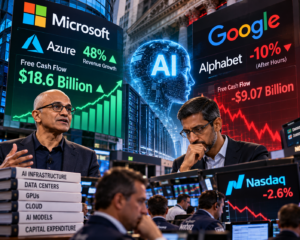
28 October को Alphabet और Microsoft के quarterly results ने इसी बदलते investor mood को सामने ला दिया। Microsoft ने strong cloud growth और लगभग $18.6 billion quarterly free cash flow के साथ AI spending को justify करने का संकेत दिया, जबकि Alphabet के भारी AI-related spending और cash outflow ने investors को चिंतित किया। Alphabet के shares extended trading में करीब 10% तक गिर गए।
Big Tech Results ने क्या signal दिया?
इस quarter की सबसे interesting कहानी यह नहीं है कि AI demand खत्म हो रही है।
इसके उलट, demand अभी भी बहुत strong है।
Problem यह है कि AI infrastructure बनाने की cost भी तेजी से बढ़ रही है।
Microsoft ने September quarter में Azure cloud revenue में 48% growth दर्ज की और अगले quarter के लिए लगभग 49–50% Azure growth का forecast दिया। Company ने $45.2 billion capital expenditure किया, लेकिन इसके बावजूद $18.6 billion free cash flow generate किया।
इसका मतलब investors को एक ऐसा model दिखाई दे रहा है जहां AI infrastructure पर huge spending के बावजूद business cash generate कर रहा है।
Alphabet की तस्वीर अलग रही।
Google Cloud revenue दोगुने से ज्यादा बढ़कर $30.71 billion हुआ, लेकिन Alphabet का free cash flow negative $9.07 billion रहा क्योंकि AI infrastructure investment तेजी से बढ़ा। वहीं Search revenue growth 12% रही, जो market expectations से कमजोर थी।
यही combination investors को uncomfortable कर रहा है।
Google की सबसे बड़ी चिंता AI नहीं, AI की Cost है
Google की AI strategy काफी aggressive रही है।
Gemini models से लेकर AI data centres और custom chips तक Alphabet infrastructure पर भारी investment कर रहा है।
लेकिन market अब यह देखना चाहता है कि:
क्या AI products नए revenue streams पैदा कर रहे हैं?
या फिर company सिर्फ existing search और cloud business को protect करने के लिए capital expenditure बढ़ा रही है?
Reuters के मुताबिक Alphabet की capital spending 2026 में लगभग $205 billion तक पहुंच सकती है और company 2027 में भी spending बढ़ाने की तैयारी कर रही है।
यह level of spending बताता है कि AI race अब सिर्फ software competition नहीं रह गई है।
यह capital-intensive infrastructure race बन चुकी है।
Microsoft ने Investors को क्यों राहत दी?
Microsoft का result इस पूरी AI story का दूसरा side दिखाता है।
Company ने strong Azure growth के साथ यह signal दिया कि AI demand enterprise cloud business में convert हो रही है।
सबसे important number था:
$18.6 billion Free Cash Flow
Reuters के मुताबिक यह analysts की लगभग $8.54 billion expectation से काफी ज्यादा था।
यानी Microsoft investors को यह convince करने में फिलहाल सफल रहा कि AI infrastructure पर खर्च सिर्फ future promise नहीं है।
उसका commercial impact अभी दिखाई दे रहा है।
इसी वजह से Microsoft के shares results के बाद 3% से ज्यादा ऊपर गए, जबकि Alphabet पर pressure आया।
AI Trade में बड़ा बदलाव: Growth से Cash Flow तक
यह शायद इस पूरे earnings season का सबसे important message है।
AI boom के शुरुआती phase में investors companies को इस आधार पर reward कर रहे थे कि:
- कितने GPUs खरीदे गए?
- कितने data centres बन रहे हैं?
- AI models कितने powerful हैं?
- Capex कितना बढ़ रहा है?
लेकिन अब calculation बदल रही है।
Investors पूछ रहे हैं:
Revenue कितना आया?
Free cash flow कितना है?
AI customer कितना pay कर रहा है?
Infrastructure investment कब recover होगा?
और क्या AI business अपनी growth खुद finance कर सकता है?
Reuters ने इसे emerging investor divide के रूप में देखा है, जहां companies की financial strength और AI spending को fund करने की क्षमता increasingly important हो रही है।
क्या AI Bubble का खतरा बढ़ रहा है?
इसका सीधा जवाब अभी नहीं है।
क्योंकि AI demand में कोई बड़ा collapse दिखाई नहीं दे रहा।
Microsoft का Azure growth इसका example है। Google Cloud भी तेजी से बढ़ रहा है। दूसरी तरफ AI companies और cloud providers लगातार compute capacity expand कर रहे हैं।
लेकिन market valuation और investment expectations इतनी ऊंची हो चुकी हैं कि अब छोटी disappointment भी बड़ा stock-market reaction पैदा कर सकती है।
22 October को भी Reuters ने report किया था कि high-profile earnings के बाद renewed AI spending concerns ने Nasdaq को 2.6% नीचे खींच दिया था।
इसका मतलब market अब AI story को blindly reward नहीं कर रहा।
असली समस्या है “AI Economics”
AI model बनाना महंगा है।
उसे train करना महंगा है।
उसे run करना भी महंगा है।
और जब millions of users AI products use करते हैं, तो inference cost भी enormous हो सकती है।
इसलिए किसी AI company के लिए users बढ़ना हमेशा profit बढ़ने के बराबर नहीं है।
अगर AI product का revenue तेजी से बढ़ता है लेकिन compute और infrastructure cost उससे भी तेजी से बढ़ती है, तो growth के बावजूद profitability मुश्किल हो सकती है।
यही वजह है कि अब AI industry में unit economics ज्यादा important होने जा रही है।
Data Centres से लेकर Chips तक पूरा Ecosystem प्रभावित होगा
AI investment सिर्फ Microsoft, Google या Meta तक सीमित नहीं है।
इसका असर पूरे technology ecosystem पर पड़ रहा है।
AI data centres के लिए चाहिए:
GPUs → Servers → Networking → Electricity → Cooling → Data Centres → Cloud Infrastructure
इस पूरी supply chain में billions of dollars invest हो रहे हैं।
Reuters के मुताबिक AI infrastructure investment इतना बड़ा हो चुका है कि companies को financing और cash generation को भी strategy का हिस्सा बनाना पड़ रहा है।
यानी AI boom अब technology story के साथ-साथ capital markets story भी बन चुका है।
Investors अब किन Companies को Reward करेंगे?
आने वाले quarters में सिर्फ “AI exposure” होना पर्याप्त नहीं होगा।
Market शायद उन companies को ज्यादा value देगा जो तीन चीजें simultaneously कर पाएंगी:
1. AI Demand Capture करें
Company के पास strong AI products और customers होने चाहिए।
2. Infrastructure को Efficient बनाएं
हर additional dollar revenue के लिए disproportionate infrastructure spending नहीं होनी चाहिए।
3. Cash Generate करें
AI investment eventually free cash flow में translate होना चाहिए।
Microsoft फिलहाल इसी model का strongest example बनकर सामने आया है। Alphabet का result दूसरी तरफ दिखाता है कि aggressive investment के साथ cash-flow pressure कितना बड़ा हो सकता है।
AI Race में अगला Battle Model का नहीं, Economics का?
AI competition अभी भी models और chips पर जारी है।
लेकिन अब एक नया layer जुड़ गया है:
Who can make AI economically sustainable?
कौन कम cost पर inference कर सकता है?
कौन enterprise customers को ज्यादा effectively monetize कर सकता है?
कौन अपने data centres का utilization बेहतर रख सकता है?
और कौन इतना cash generate कर सकता है कि अगले generation के AI infrastructure के लिए external financing पर निर्भर न रहना पड़े?
यही सवाल आने वाले समय में Big Tech valuations को ज्यादा प्रभावित कर सकते हैं।
India के लिए इसका क्या मतलब है?
इस global AI spending cycle का India पर भी बड़ा असर है।
India data centres, cloud infrastructure और AI services के लिए एक major market बन रहा है।
लेकिन global AI economics में बदलाव Indian IT companies के लिए भी important होगा।
अगर clients AI transformation पर spending बढ़ाते हैं, तो TCS, Infosys, HCLTech, Wipro जैसी companies को नए opportunities मिल सकते हैं।
लेकिन अगर global companies AI spending को optimize करना शुरू करती हैं, तो केवल “AI services” बेचने से काम नहीं चलेगा।
Indian IT companies को measurable productivity, automation और business outcomes दिखाने होंगे।
यानी AI boom का अगला phase शायद AI implementation से AI ROI की तरफ जाएगा।
Conclusion: AI Boom खत्म नहीं हुआ, लेकिन अब उसका Report Card शुरू हो गया है
Big Tech earnings से अभी यह conclusion निकालना गलत होगा कि AI boom खत्म हो रहा है।
असल में picture ज्यादा complicated है।
Microsoft के results दिखाते हैं कि AI demand और cloud growth strong हो सकती है। Alphabet के numbers बताते हैं कि उसी demand को support करने के लिए infrastructure पर कितना बड़ा financial burden आ सकता है।
इसलिए 2026 के अंत में AI industry का सबसे बड़ा सवाल शायद यह नहीं है कि:
“AI कितना powerful बन सकता है?”
बल्कि:
“AI कितना profitable और financially sustainable बन सकता है?”
Wall Street अब AI promises के बजाय cash flow, revenue quality और return on investment देखना शुरू कर चुका है।
और यही बदलाव तय करेगा कि आज का AI infrastructure boom future का trillion-dollar business बनेगा या massive capital spending cycle साबित होगा।