Cyclone Arnab: 1.8 Lakh लोगों की Evacuation के बाद क्या India का Disaster Response बदल गया है?
Location: Andhra Pradesh
Cyclone Arnab ने 28 October को Andhra Pradesh coast पर landfall किया और coastal districts में तेज हवाओं, भारी बारिश, flooding और infrastructure damage का कारण बना। लेकिन इस cyclone की सबसे बड़ी कहानी सिर्फ तबाही नहीं है।
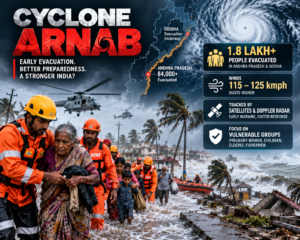
इस बार authorities ने landfall से पहले ही 1.8 lakh से ज्यादा लोगों को Andhra Pradesh और Odisha से evacuate किया। इससे एक बड़ा सवाल सामने आया है—क्या India का disaster-management model अब केवल cyclone के बाद relief और rescue पर dependent नहीं रहा, बल्कि prediction, technology और early evacuation पर shift हो रहा है?
Cyclone Arnab ने कितनी बड़ी चुनौती पैदा की?
Arnab 2026 के North Indian Ocean cyclone season का पहला named storm था। यह Bay of Bengal में 25 October के आसपास विकसित हुआ और तेजी से intensify होकर Andhra Pradesh की तरफ बढ़ा।
IMD के forecast के अनुसार cyclone ने Andhra Pradesh और Yanam coast के बीच landfall किया। Landfall के दौरान इसे very severe cyclonic storm category में रखा गया और winds लगभग 115–125 kmph तक पहुंचीं, जबकि gusts इससे ज्यादा तेज थीं। NASA के अनुसार landfall के समय sustained winds करीब 130 kmph थीं।
Coastal Andhra के कई इलाकों में trees और electricity poles उखड़े, homes और crops को नुकसान हुआ और transport तथा power networks प्रभावित हुए। Reuters के मुताबिक कम से कम 15,000 electricity poles damage हुए और कई क्षेत्रों में power supply बाधित हुई।
यानी storm की intensity काफी गंभीर थी।
फिर भी disaster response का सबसे important metric सिर्फ damage नहीं बल्कि कितने लोगों को समय रहते खतरे से बाहर निकाला गया भी है।
1.8 लाख लोगों की evacuation क्यों महत्वपूर्ण है?
Cyclone Arnab के आने से पहले Andhra Pradesh और Odisha में 180,000 से ज्यादा लोगों को vulnerable areas से evacuate किया गया।
Andhra Pradesh में अकेले 84,000 से ज्यादा लोगों को सुरक्षित locations और shelters में move किया गया था। Odisha में भी हजारों लोगों को vulnerable areas से हटाया गया।
यह संख्या सिर्फ administrative achievement नहीं है।
Coastal cyclone के दौरान सबसे ज्यादा casualties अक्सर storm surge, flooding, collapsing structures, falling trees और बिजली से जुड़ी घटनाओं से होती हैं।
अगर population को impact zone से पहले ही बाहर निकाल दिया जाए, तो वही cyclone जो हजारों लोगों की जान ले सकता है, comparatively lower human casualties के साथ गुजर सकता है।
यही early evacuation model की असली ताकत है।
Technology ने disaster response को कैसे बदला?
Cyclone Arnab के दौरान technology सिर्फ weather forecast तक सीमित नहीं रही।
Authorities ने satellite observations, weather models, Doppler radar data और digital communication systems के जरिए cyclone की movement और intensity को monitor किया।
NASA की satellite observations ने भी Arnab की structure और movement को track किया।
भारत में IMD की forecasting capabilities और state-level disaster-management systems अब लगातार अधिक granular information देने की कोशिश कर रहे हैं।
यानी government को सिर्फ यह पता नहीं चलता कि:
“Cyclone आ रहा है।”
बल्कि सवाल बदलकर यह हो गया है:
“किस district में कितना risk है, कौन-से villages vulnerable हैं और किन लोगों को पहले move करना चाहिए?”
यही बदलाव disaster management की पूरी philosophy को बदल सकता है।
Andhra Pradesh ने risk mapping पर क्यों जोर दिया?
Andhra Pradesh Chief Minister N. Chandrababu Naidu ने कहा कि technology ने authorities को high-risk areas identify करने में मदद की और casualties तथा property damage को सीमित करने में भूमिका निभाई।
इस approach में disaster management को एक broad coastal warning की जगह risk-based intervention के रूप में देखा जाता है।
मतलब:
- Low-risk area → monitoring
- Moderate-risk area → preparedness
- High-risk area → evacuation
- Extremely vulnerable locations → priority evacuation and sheltering
अगर यह system लगातार बेहतर होता है, तो future cyclones में evacuation decisions ज्यादा targeted और faster हो सकते हैं।
Pregnant women और vulnerable groups की evacuation
Cyclone response का एक दूसरा important aspect भी सामने आया।
Andhra Pradesh authorities ने vulnerable coastal areas से pregnant women को भी पहले से सुरक्षित health facilities में shift किया। Reports के अनुसार हजारों pregnant women को PHCs, CHCs और hospitals में move किया गया था।
यह दिखाता है कि modern disaster management सिर्फ “पूरी population को evacuate करो” वाली strategy नहीं है।
अब focus vulnerable groups पर भी है:
Pregnant women
Children
Elderly people
Persons with disabilities
Patients
Fishermen
Low-lying coastal communities
इन groups के लिए अलग evacuation और shelter planning casualty reduction में बड़ा difference ला सकती है।
सिर्फ evacuation नहीं, critical infrastructure protection भी
Cyclone आने से पहले authorities ने केवल लोगों को move नहीं किया।
Fishing boats को secure किया गया, emergency teams deploy की गईं, shelters activate किए गए और कई locations पर schools तथा transportation services को temporarily बंद किया गया।
PIB के अनुसार National Crisis Management Committee ने landfall से पहले preparedness review किया था। NDRF और SDRF teams को standby रखा गया था, जबकि district control rooms activate कर दिए गए थे। Fishermen को समुद्र में न जाने की advisory भी जारी की गई थी।
यह response दिखाता है कि modern cyclone management एक single department का काम नहीं है।
इसमें शामिल होते हैं:
IMD + State Disaster Authority + District Administration + NDRF + SDRF + Police + Health Department + Transport + Power Departments
यानी disaster response अब एक multi-agency operating system बन रहा है।
क्या India “Post-Disaster Relief” से “Pre-Disaster Prevention” की तरफ जा रहा है?
यही Cyclone Arnab से निकलने वाला सबसे बड़ा सवाल है।
पुराने model में disaster response का बड़ा हिस्सा cyclone के बाद शुरू होता था:
Damage → Rescue → Relief → Reconstruction
लेकिन technology-driven disaster management इसे बदलकर:
Prediction → Risk Mapping → Early Warning → Evacuation → Impact Reduction → Recovery
की तरफ ले जा सकता है।
यह बदलाव सिर्फ cyclones के लिए नहीं है।
इसी model को floods, landslides, heatwaves, cloudbursts और urban disasters में भी इस्तेमाल किया जा सकता है।
Odisha का experience भी महत्वपूर्ण
Odisha लंबे समय से cyclone preparedness के लिए जाना जाता है।
Arnab के दौरान भी state ने vulnerable districts में evacuation और preparedness पर focus किया। Indian Express के अनुसार Odisha authorities ने evacuation और preparation के बाद zero casualty objective हासिल करने की बात कही।
इसका मतलब यह नहीं है कि disaster पूरी तरह avoid किया जा सकता है।
Infrastructure damage, crop loss और economic disruption फिर भी हो सकते हैं।
लेकिन disaster management का सबसे बड़ा objective हमेशा यह होना चाहिए कि लोगों की जान बचाई जाए।
फिर भी क्या India का model पूरी तरह successful है?
नहीं।
Cyclone Arnab ने यह भी दिखाया कि India के सामने अभी कई challenges हैं।
1. Infrastructure vulnerability
Thousands of electricity poles और अन्य infrastructure damage होने से पता चलता है कि coastal infrastructure को extreme weather के लिए और resilient बनाना होगा।
2. Urban flooding
Heavy rainfall के दौरान coastal cities और towns में drainage capacity बड़ी चुनौती बनी रहती है।
3. Economic losses
लोगों को बचाना पहला लक्ष्य है, लेकिन agriculture, fisheries, roads, electricity और businesses के नुकसान की economic cost भी बड़ी हो सकती है।
4. Last-mile warning
Forecast तभी useful है जब warning समय पर उस व्यक्ति तक पहुंचे जो वास्तव में खतरे में है।
5. Climate uncertainty
Warmer oceans और changing climate conditions cyclone intensity और rainfall patterns को unpredictable बना सकते हैं।
Climate Change ने खतरा कितना बदला है?
Cyclone Arnab ऐसे समय में आया जब scientists और meteorologists extreme weather patterns पर लगातार नजर रख रहे हैं।
Business Today की रिपोर्ट के अनुसार warmer-than-normal sea surface temperatures और possible El Niño influence ने Arnab के rapid intensification में भूमिका निभाई हो सकती है।
हालांकि किसी एक cyclone को सीधे climate change का परिणाम बताना scientifically सही नहीं होगा।
लेकिन broader trend यह जरूर दिखाता है कि warmer atmosphere और ocean conditions disaster preparedness को increasingly important बना रहे हैं।
यानी future disaster management में forecasting के साथ climate modelling भी महत्वपूर्ण होगी।
क्या AI अगला बड़ा tool बनेगा?
यहीं से India के disaster-management model का अगला phase शुरू हो सकता है।
आज weather forecasting में huge amounts of satellite data, radar information और numerical models इस्तेमाल होते हैं।
आने वाले समय में AI का उपयोग:
- Flood-risk prediction
- Village-level evacuation mapping
- Road blockage prediction
- Power-grid risk assessment
- Shelter allocation
- Emergency resource deployment
- Real-time damage assessment
जैसे areas में किया जा सकता है।
अगर AI यह predict कर सके कि किसी specific village में flooding की probability सबसे ज्यादा है, तो evacuation resources वहां पहले भेजे जा सकते हैं।
इससे response reactive नहीं बल्कि predictive हो सकता है।
Cyclone Arnab का सबसे बड़ा lesson
Cyclone Arnab ने एक important reality सामने रखी है:
Strong disaster management का मतलब cyclone को रोकना नहीं है।
मतलब है—
Storm आए, लेकिन casualties कम से कम हों।
Technology, early warning, evacuation और inter-agency coordination इसी objective को achieve करने के tools हैं।
Arnab के दौरान 1.8 lakh से ज्यादा लोगों को पहले ही सुरक्षित स्थानों पर move किया गया। इसके बावजूद infrastructure और economic damage हुआ, लेकिन human impact को कम करने की कोशिश साफ दिखाई दी।
Conclusion: India का अगला Disaster Model कैसा होगा?
Cyclone Arnab को सिर्फ Andhra Pradesh की एक natural disaster story के रूप में देखना आसान है।
लेकिन इसके पीछे India के disaster-management system में हो रहे बड़े बदलाव की कहानी भी है।
Satellite data + AI + weather forecasting + risk mapping + early warning + mass evacuation + emergency response
ये सभी मिलकर ऐसा model बना सकते हैं जिसमें disaster आने के बाद लोगों को बचाने के बजाय disaster आने से पहले लोगों को खतरे से बाहर निकालना प्राथमिकता बन जाए।
Arnab ने coastal infrastructure की vulnerabilities भी सामने रखीं और यह भी दिखाया कि technology-enabled evacuation कितनी महत्वपूर्ण हो सकती है।
आने वाले वर्षों में India की disaster preparedness की असली परीक्षा यह नहीं होगी कि cyclone कितना powerful था।
सवाल यह होगा:
“क्या हमें पर्याप्त समय पहले पता था कि खतरा कहां है—and क्या हमने उस खतरे से लोगों को समय रहते बाहर निकाल दिया?”
अगर इसका जवाब “हाँ” होता है, तो Cyclone Arnab जैसी disasters India के लिए एक नए predictive और prevention-first disaster management model की दिशा में महत्वपूर्ण कदम साबित हो सकती हैं।