Infosys का AI Shock: Growth Forecast क्यों घटा और क्या Traditional Indian IT Model बदल रहा है?
Location: Bengaluru, Karnataka
India की IT industry लंबे समय से global outsourcing model की backbone रही है। हजारों engineers, large technology projects और long-term contracts ने TCS, Infosys और Wipro जैसी companies को global technology services का बड़ा नाम बनाया।
लेकिन Artificial Intelligence के तेजी से बढ़ते adoption ने इस model के सामने एक नया सवाल खड़ा कर दिया है।
अगर AI वही काम कम समय और कम cost में कर सकता है, जिसके लिए पहले बड़ी IT teams की जरूरत होती थी, तो traditional outsourcing business का future क्या होगा?
Infosys के latest quarterly results ने इस सवाल को और गंभीर बना दिया है।
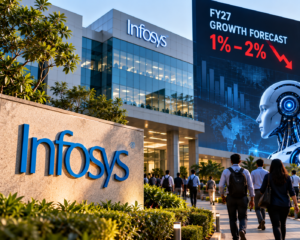
23 October 2026 को Infosys ने FY27 के लिए अपना revenue growth guidance घटाकर 1%–2% कर दिया, जबकि इससे पहले guidance 1.5%–3% थी। Reuters के अनुसार North America में कमजोर demand, pricing pressure और clients का AI-related spending की ओर shift इस downgrade के बड़े कारणों में शामिल हैं।
लेकिन कहानी का सबसे interesting हिस्सा यह है कि Infosys का AI business खुद तेजी से बढ़ रहा है।
तो फिर overall growth क्यों नहीं बढ़ रही?
AI Revenue बढ़ा, फिर भी Growth Forecast क्यों घटा?
Infosys ने September quarter में ₹49,244 crore revenue report किया, जो reported terms में साल-दर-साल 10.7% ज्यादा था। Constant-currency terms में quarterly revenue growth 1.5% रही। Operating margin 21% पर stable रहा।
वहीं company के AI-related revenue में quarter-on-quarter 29% growth दर्ज हुई।
यानी एक तरफ AI business तेजी से expand हो रहा है, लेकिन दूसरी तरफ traditional IT services में demand और pricing pressure overall growth को दबा रहे हैं।
यही Indian IT industry का नया paradox है:
AI business बढ़ रहा है, लेकिन AI के कारण traditional business की economics भी बदल रही है।
North America बना सबसे बड़ा Pressure Point
Infosys की revenue का बड़ा हिस्सा North American market से आता है।
लेकिन September quarter में North America revenue 1.5% गिरा, जो करीब दो साल में region का सबसे कमजोर प्रदर्शन था। Reuters के मुताबिक technology और retail sector के clients ने projects को scale back किया, जबकि spending का हिस्सा AI, cloud services और AI-native companies की तरफ shift हुआ।
इसका सीधा असर Infosys की growth expectations पर पड़ा।
North America में clients अब केवल यह नहीं पूछ रहे कि:
“आप कितने engineers देंगे?”
बल्कि सवाल बदलकर हो रहा है:
“AI की मदद से आप हमारा काम कितनी जल्दी, कितने कम cost में और measurable productivity के साथ कर सकते हैं?”
यहीं traditional outsourcing model पर pressure बढ़ रहा है।
Billable Hours से Outcome-Based Business तक
Indian IT companies का traditional model काफी हद तक manpower और billable hours पर आधारित रहा है।
अगर किसी client को 1,000 engineers की जरूरत है, तो IT company manpower deploy करती है और services के लिए billing करती है।
लेकिन AI coding assistants, automation tools और autonomous AI agents इस equation को बदल सकते हैं।
अगर 1,000 लोगों का काम AI-enabled systems के जरिए 700 या 500 लोगों में पूरा हो सकता है, तो client naturally productivity gains का फायदा मांग सकता है।
Reuters के अनुसार AI के कारण clients lower prices और higher productivity की मांग कर रहे हैं, जिससे traditional outsourcing contracts पर pricing pressure बढ़ रहा है।
इसका मतलब future में revenue model धीरे-धीरे:
Hours → Projects → Outcomes → AI-powered Results
की तरफ shift हो सकता है।
सबसे बड़ा सवाल: AI Indian IT को खत्म करेगा या बदल देगा?
यह कहना गलत होगा कि AI Indian IT industry को खत्म कर देगा।
असल में AI Indian IT के लिए एक बड़ा opportunity भी है।
Infosys ने बताया कि उसके बड़े deal wins की total contract value September quarter में $5.2 billion रही, जिसमें 62% हिस्सा net-new business का था। Company ने एक $2 billion से ज्यादा का mega deal भी highlight किया।
इसका मतलब demand पूरी तरह गायब नहीं हुई है।
Demand का nature बदल रहा है।
Clients अब traditional application maintenance या manpower augmentation के बजाय:
- AI transformation
- Cloud modernization
- Data platforms
- Cybersecurity
- Automation
- AI agents
- Enterprise AI
जैसे areas में ज्यादा investment कर रहे हैं।
Infosys के लिए सबसे बड़ा Challenge क्या है?
सबसे बड़ा challenge AI बनाना नहीं है।
Challenge है:
AI से नया revenue बनाना।
अगर AI किसी existing contract को ज्यादा efficiently deliver करने में मदद करता है, तो company की margin improve हो सकती है।
लेकिन अगर उसी AI productivity का फायदा client lower pricing के रूप में मांग लेता है, तो revenue जरूरी नहीं कि उसी speed से बढ़े।
यही वजह है कि AI productivity और AI revenue के बीच difference समझना जरूरी है।
एक company AI से ज्यादा efficient हो सकती है, लेकिन इसका मतलब यह नहीं कि उसकी top-line भी उतनी ही तेजी से बढ़ेगी।
TCS, Wipro और HCLTech के लिए भी Warning Signal
Infosys की situation को केवल Infosys की problem मानना आसान होगा।
लेकिन इसका असर पूरी Indian IT industry पर पड़ सकता है।
India का लगभग $315 billion IT sector weak client spending और AI-driven pricing pressure से गुजर रहा है। Reuters ने जुलाई में भी Indian IT firms के लिए muted growth outlook और AI-driven pricing pressure की warning दी थी।
TCS, Wipro और HCLTech भी इसी global enterprise spending cycle का हिस्सा हैं।
इसलिए आने वाले quarters में investors शायद सिर्फ यह नहीं देखेंगे कि:
“कितने नए contracts मिले?”
बल्कि यह भी देखेंगे:
“इन contracts में AI का हिस्सा कितना है और उनका revenue में conversion कितना हो रहा है?”
AI Jobs के लिए इसका क्या मतलब है?
यह सबसे sensitive सवाल है।
Traditional IT industry ने लाखों jobs create की हैं, खासकर software development, testing, support, maintenance और business-process services में।
AI इन सभी areas में productivity बढ़ा सकता है।
इससे entry-level repetitive work पर pressure आने की संभावना है।
लेकिन दूसरी तरफ नए roles भी बढ़ेंगे:
AI Engineer
AI Agent Developer
AI Architect
AI Security Specialist
AI Governance Expert
Data Engineer
AI Transformation Consultant
इसलिए future में सिर्फ coding जानना पर्याप्त नहीं हो सकता।
AI को business process में integrate करना और AI systems को manage करना ज्यादा valuable skill बन सकता है।
India के IT Business Model में तीन बड़े बदलाव
1. Fewer People, More Productivity
Companies कम manpower से ज्यादा output deliver करने की कोशिश करेंगी।
2. Services से AI Solutions की तरफ
IT companies सिर्फ developers provide करने के बजाय industry-specific AI solutions बेचेंगी।
3. Billing Hours से Business Outcomes
Future contracts में client शायद यह ज्यादा देखे कि AI implementation से revenue कितना बढ़ा या cost कितनी कम हुई।
यानी Indian IT का future शायद:
“How many people are working?”
से ज्यादा:
“How much business value are you creating?”
पर depend करेगा।
Infosys के लिए Positive Signal भी है
Growth guidance downgrade के बावजूद Infosys की story पूरी तरह negative नहीं है।
Large deal wins मजबूत रहे हैं और AI-related revenue तेजी से बढ़ रहा है। Company ने operating margin guidance भी 20%–22% पर maintain की है।
इससे संकेत मिलता है कि company AI transformation में investment कर रही है और traditional business pressure के बीच efficiency बचाने की कोशिश कर रही है।
इसलिए इसे केवल “Infosys का AI failure” कहना गलत होगा।
यह ज्यादा सही तरीके से business model transition है।
क्या Indian IT का Golden Era खत्म हो रहा है?
शायद नहीं।
लेकिन उसका पहला version जरूर बदल रहा है।
एक समय Indian IT की सबसे बड़ी ताकत थी:
Large skilled workforce + lower cost + global delivery
अब अगला competitive advantage हो सकता है:
AI + Human Talent + Domain Expertise + Enterprise Integration
जिस company के पास केवल engineers हैं, उसे AI competition का pressure ज्यादा महसूस हो सकता है।
लेकिन जिसके पास engineers के साथ proprietary platforms, AI agents, industry knowledge और strong client relationships हैं, वह इस transition को growth opportunity में बदल सकती है।
सबसे बड़ा खतरा AI नहीं, AI का गलत Business Model हो सकता है
Indian IT companies के लिए असली सवाल यह नहीं है कि वे AI adopt करेंगी या नहीं।
लगभग सभी बड़ी companies AI adopt कर रही हैं।
सवाल है:
क्या वे AI से इतना नया value create कर पाएंगी कि traditional outsourcing revenue में आने वाली कमी को offset किया जा सके?
अगर जवाब हां है, तो AI Indian IT का next growth engine बन सकता है।
अगर नहीं, तो AI productivity बढ़ाने के बावजूद revenue growth कमजोर रह सकती है।
Infosys के latest numbers इसी transition की पहली बड़ी warning दिखाई देते हैं।
Conclusion: Infosys का AI Shock असल में पूरे Indian IT Sector का Test है
Infosys का FY27 growth guidance 1%–2% तक घटाना सिर्फ एक quarterly earnings story नहीं है।
यह उस बड़े बदलाव का संकेत है जिसमें global companies technology spending को traditional outsourcing से हटाकर AI, automation और cloud-centric transformation की तरफ ले जा रही हैं।
Interesting बात यह है कि Infosys का AI business खुद तेजी से बढ़ रहा है।
यानी problem यह नहीं कि AI बिक नहीं रहा।
Problem यह है कि:
AI की productivity से पैदा होने वाली value का कितना हिस्सा IT companies के revenue में बदल पाएगा?
यही आने वाले वर्षों में TCS, Infosys, Wipro और HCLTech जैसी companies के लिए सबसे बड़ा business test होगा।
Indian IT industry का अगला chapter शायद manpower outsourcing का नहीं, बल्कि AI-powered enterprise transformation का होगा।
और इस नए दौर में सबसे बड़ा सवाल यह नहीं होगा कि “किसके पास सबसे ज्यादा engineers हैं?”
बल्कि यह होगा:
“किसके पास सबसे productive AI-enabled workforce और सबसे मजबूत enterprise AI business model है?”