Lucknow में Government Offices में AI की Entry: क्या UP Administration का अगला Model AI-Powered होगा?
Location: Lucknow, Uttar Pradesh
Artificial Intelligence अब सिर्फ private companies, startups और technology sector तक सीमित नहीं रह गया है। Uttar Pradesh में अब इसका इस्तेमाल government administration के day-to-day कामकाज में बढ़ाने की दिशा में कदम दिखाई दे रहे हैं।
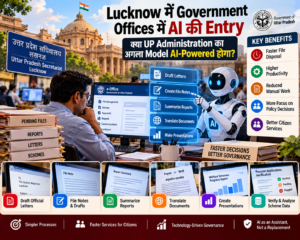
Lucknow में Social Welfare Department ने सरकारी कामों में AI और digital technology के इस्तेमाल पर focus किया है। इसका इस्तेमाल official letters का draft तैयार करने, file notings और drafts बनाने, reports का summary तैयार करने, documents translate करने और presentations बनाने जैसे कामों में किया जा सकता है।
यह बदलाव देखने में छोटा लग सकता है, लेकिन अगर यही model दूसरे departments तक scale होता है तो इसका असर UP के पूरे administrative workflow पर पड़ सकता है।
AI अब सरकारी file के अंदर पहुंचेगा
Government offices में किसी decision तक पहुंचने के लिए कई layers से गुजरना पड़ता है।
Letter आता है, उसका जवाब तैयार होता है, file बनती है, noting होती है, report पढ़ी जाती है, दूसरे documents से information ली जाती है और फिर senior officers के सामने मामला जाता है।
इनमें से कई tasks time-consuming होते हैं।
Social Welfare Department का proposed AI use इसी administrative workload को कम करने पर focused है।
AI की मदद से:
- Official letters का initial draft तैयार किया जा सकता है
- File notes और drafts बनाने में assistance मिल सकती है
- लंबी reports का summary तैयार किया जा सकता है
- Documents का translation किया जा सकता है
- Presentations जल्दी तैयार की जा सकती हैं
इसका मतलब यह नहीं है कि AI government officers की जगह लेगा। फिलहाल इसका role administrative assistant और productivity tool जैसा दिखाई देता है।
Lucknow में इस पर चर्चा क्यों हुई?
इस मुद्दे पर 17 October को Lucknow स्थित Dr Ram Manohar Lohia Uttar Pradesh Academy of Administration and Management (RUPAAM) में Social Welfare Department के retreat programme के दौरान चर्चा हुई।
Department के Deputy Director Anand Kumar Singh ने government work में AI और digital technology की उपयोगिता पर जोर दिया।
Discussion का broader focus administrative processes को सरल बनाने, efficiency बढ़ाने और technology के बेहतर इस्तेमाल पर था।
यानी यह सिर्फ एक software install करने का मामला नहीं है।
सरकार यह देख रही है कि existing administrative processes में technology को किस तरह integrate किया जा सकता है।
E-Office के साथ AI का combination कितना बड़ा बदलाव ला सकता है?
इस development का एक महत्वपूर्ण हिस्सा e-Office है।
Digital file movement के कारण physical paperwork और manual tracking को कम किया जा सकता है। इसके ऊपर AI-based assistance जुड़ने पर workflow और तेज हो सकता है।
उदाहरण के लिए किसी department में हजारों pages की report आती है।
पहले officer या staff को उसे manually पढ़कर important points निकालने पड़ सकते हैं।
AI उस report का preliminary summary तैयार कर सकता है।
Officer उस summary को original document से verify करके decision-making में इस्तेमाल कर सकता है।
यानी model हो सकता है:
Digital File → AI Assistance → Human Verification → Official Decision
इसमें final authority अभी भी human officer के पास रहती है।
क्या AI से सरकारी files जल्दी निपटेंगी?
यही इस initiative का सबसे बड़ा expected benefit है।
Government offices में delay कई बार information की complexity, paperwork और coordination की वजह से होता है।
AI repetitive documentation tasks को तेजी से complete करने में मदद कर सकता है।
इससे officers अपना ज्यादा समय उन मामलों पर लगा सकते हैं जहां:
- detailed examination जरूरी हो
- policy decision लेना हो
- legal interpretation चाहिए हो
- beneficiary की शिकायत हो
- multiple departments के बीच coordination चाहिए हो
Social Welfare Department की discussions में भी office procedures को simplify करने, decision-making delays कम करने और file disposal को तेज करने पर जोर दिया गया।
लेकिन असली बदलाव सिर्फ drafting में नहीं होगा
अगर AI का इस्तेमाल केवल letters और presentations बनाने तक सीमित रहता है, तो इसका impact relatively छोटा होगा।
लेकिन UP पहले से welfare administration में AI के दूसरे use cases पर भी काम करने की दिशा में बढ़ रहा है।
Recent reporting के अनुसार Social Welfare Department में Old Age Pension, National Family Benefit Scheme और scholarship-related data में AI-based verification, analysis और monitoring की possibilities पर भी काम हो रहा है।
यानी धीरे-धीरे AI का role:
Document Creation → Data Analysis → Verification → Monitoring
तक बढ़ सकता है।
Beneficiaries के लिए इसका क्या मतलब होगा?
सरकारी AI initiative की असली success इस बात से तय नहीं होगी कि कितनी AI technology इस्तेमाल हुई।
Success का सवाल होगा:
क्या आम नागरिक को government service जल्दी मिली?
अगर AI-based systems सही तरीके से implement होते हैं तो pension applications, scholarship records और family-benefit schemes जैसी processes में routine verification तेज हो सकती है।
AI बड़े datasets में discrepancies या unusual patterns identify करने में officers की मदद कर सकता है। इससे manual workload कम हो सकता है और officials complicated cases पर ज्यादा attention दे सकते हैं।
लेकिन यहां human verification बेहद महत्वपूर्ण रहेगी।
किसी genuine beneficiary को सिर्फ गलत digital record या algorithmic error की वजह से benefit से वंचित नहीं किया जाना चाहिए।
सबसे बड़ा सवाल: AI की गलती की जिम्मेदारी किसकी होगी?
यही government AI adoption की सबसे बड़ी challenge है।
अगर AI ने किसी document का गलत summary बनाया तो?
अगर translation में meaning बदल गया तो?
अगर किसी beneficiary के data को गलत तरीके से flag कर दिया गया तो?
अगर AI-generated file noting में factual error रह गया तो?
इन situations में final responsibility AI की नहीं बल्कि government officer और department की होगी।
इसलिए Human-in-the-loop model जरूरी होगा।
AI suggestion दे सकता है।
लेकिन final verification और decision trained government officials को ही करना होगा।
Data Privacy भी बड़ा मुद्दा बनेगा
Government departments के पास citizens का sensitive information होता है।
Social Welfare Department के पास beneficiaries से जुड़े identity, income, family और scheme-related records हो सकते हैं।
इसलिए AI systems को deploy करते समय सिर्फ efficiency नहीं, बल्कि:
Data Security + Privacy + Access Control + Audit Trail
पर भी ध्यान देना होगा।
अगर government AI system में sensitive data इस्तेमाल होता है तो यह जरूरी होगा कि कौन data access कर सकता है, AI किस information को process कर सकता है और decisions को बाद में audit कैसे किया जाएगा—इन सबके clear rules हों।
UP पहले से AI Mission की तरफ बढ़ रहा है
Social Welfare Department की पहल को UP के broader AI push से अलग करके नहीं देखा जा सकता।
October 2026 में UP Cabinet ने dedicated Artificial Intelligence Mission (UP-AIM) को approve किया है।
Mission का लक्ष्य कम से कम 100 AI startups को support करना और 5 lakh युवाओं को train करना है। इसके अलावा 100 से ज्यादा AI use cases develop/implement करने और उनमें से 25–30 को wider scale पर ले जाने की योजना है।
UP AI Mission में AI-ready data systems, departmental applications, secure data exchange और GPU-based computing facilities वाला UP AI Stack भी प्रस्तावित है।
इसका मतलब है कि government में AI adoption को isolated experiment के बजाय wider state-level ecosystem के रूप में develop करने की कोशिश हो रही है।
Lucknow से शुरू होकर पूरे UP तक जा सकता है model
अगर Social Welfare Department में AI-based administrative workflows सफल रहते हैं, तो इसका model दूसरे departments में भी इस्तेमाल हो सकता है।
Revenue Department में document processing।
Health Department में data analysis।
Education Department में student records।
Transport Department में monitoring।
Urban bodies में citizen complaints।
Panchayat administration में data management।
ऐसे कई areas हैं जहां large-scale data और repetitive administrative processes मौजूद हैं।
UP की AI Mission में सभी 75 districts में district AI centres विकसित करने की योजना भी बताई गई है, जिससे AI adoption को Lucknow तक सीमित रखने के बजाय grassroots level तक ले जाने का लक्ष्य दिखाई देता है।
क्या Government Officer का काम बदलेगा?
हाँ, संभव है।
लेकिन बदलाव का मतलब यह जरूरी नहीं कि government employees की संख्या कम हो जाएगी।
अधिक संभावित बदलाव यह है कि officers का समय routine paperwork से हटकर analysis, supervision और decision-making की तरफ जाए।
आज एक कर्मचारी को एक report बनाने में घंटों लग सकते हैं।
AI initial draft कुछ minutes में तैयार कर सकता है।
लेकिन officer को यह देखना होगा कि:
क्या information सही है?
क्या conclusion सही है?
क्या language official standards के अनुरूप है?
क्या कोई important detail छूट तो नहीं गई?
इस तरह government employee की भूमिका “document creator” से बढ़कर AI-assisted decision supervisor बन सकती है।
क्या AI bureaucracy को faster बना पाएगा?
यह सबसे बड़ा test होगा।
Technology लगाना आसान है।
लेकिन technology को existing bureaucracy में successfully integrate करना मुश्किल है।
अगर AI tool है लेकिन officers trained नहीं हैं, तो फायदा सीमित रहेगा।
अगर digital infrastructure कमजोर है, तो AI workflow भी slow होगा।
अगर departments के databases आपस में connect नहीं हैं, तो AI की analytical capability सीमित हो सकती है।
इसलिए AI के साथ-साथ digital infrastructure, training, data quality और inter-department coordination भी जरूरी होंगे।
Conclusion: Lucknow में AI की entry छोटी खबर नहीं है
Social Welfare Department में letters, file notes, reports, translation और presentations जैसे routine government tasks के लिए AI के इस्तेमाल पर चर्चा शायद एक छोटी administrative reform जैसी दिखाई दे।
लेकिन इसके पीछे बड़ा बदलाव छिपा है।
UP पहले ही AI Mission, AI infrastructure, skills development और government use cases की दिशा में बढ़ रहा है।
अगर Lucknow में शुरू हो रहा यह administrative AI model सफल रहता है, तो आने वाले समय में government office की traditional image बदल सकती है।
जहां पहले:
File → Clerk → Officer → Senior Officer
का workflow dominant था, वहां भविष्य में model कुछ ऐसा हो सकता है:
Digital File → AI Assistance → Officer Verification → Faster Decision
लेकिन अंतिम लक्ष्य AI को government में लाना नहीं होना चाहिए।
लक्ष्य होना चाहिए:
कम delay, बेहतर transparency और citizen को faster service.
अगर technology यह deliver कर पाती है, तो Lucknow की government offices में AI की entry सिर्फ एक technology upgrade नहीं होगी—यह UP administration के काम करने के तरीके में structural change की शुरुआत हो सकती है।