Delhi में Protest Restrictions बनाम Democratic Space: क्या Protest करने की जगह लगातार छोटी हो रही है?
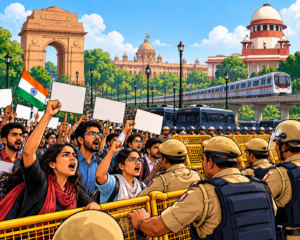
Location: New Delhi
Democracy में protest सिर्फ सड़क पर भीड़ जमा करने का नाम नहीं है। यह सरकार और institutions के सामने disagreement दर्ज कराने का एक constitutional तरीका भी है। लेकिन जब protest के जवाब में preventive detention, barricading, prohibitory orders, Metro restrictions और internet curbs जैसे कदम उठते हैं, तो सवाल सिर्फ law and order का नहीं रहता—सवाल democratic space का भी बन जाता है।
Delhi में Chief Election Commissioner Gyanesh Kumar और electoral rolls में चल रहे Special Intensive Revision (SIR) के खिलाफ हुए protests ने इसी debate को फिर सामने ला दिया है।
October में हुए demonstrations के दौरान authorities ने security restrictions लगाए, protesters को detain किया और Central Delhi के कई हिस्सों में movement पर controls लगाए। 10 October के बड़े mobilisation के दौरान Reuters ने 2,000 से ज्यादा detentions की रिपोर्ट की थी।
इसके बाद मामला Supreme Court तक पहुंचा, जिसने peaceful protesters की illegal detention, public transport restrictions और free movement को लेकर authorities से जवाब मांगा।
अब असली सवाल है:
क्या Delhi में protest को regulate किया जा रहा है या धीरे-धीरे उसकी practical space कम होती जा रही है?
Delhi में विवाद की शुरुआत कहां से हुई?
इस पूरे episode की background electoral rolls को लेकर चल रहे SIR और Chief Election Commissioner Gyanesh Kumar के खिलाफ political तथा civil-society protests हैं।
Protesters का आरोप है कि voter-list revision की प्रक्रिया में eligible voters के नाम प्रभावित हो सकते हैं और Election Commission को इस प्रक्रिया पर greater transparency देनी चाहिए।
Election Commission और BJP ने इन आरोपों को खारिज किया है और कहा है कि voter deletions में relocated, untraceable या deceased voters जैसी categories शामिल हैं तथा eligible citizens के लिए re-enrolment का रास्ता मौजूद है।
इस political disagreement ने धीरे-धीरे एक बड़ा constitutional debate पैदा कर दिया—protest का अधिकार और public order की responsibility आखिर कहां balance होगी?
क्या Constitution protest का अधिकार देता है?
हाँ।
Indian Constitution के Article 19(1)(a) के तहत citizens को freedom of speech and expression मिलता है, जबकि Article 19(1)(b) peaceful assembly का अधिकार देता है।
लेकिन ये rights absolute नहीं हैं।
Article 19 के तहत public order, sovereignty, security और अन्य constitutional grounds पर reasonable restrictions लगाए जा सकते हैं।
इसलिए किसी भी protest के लिए यह कहना सही नहीं होगा कि protesters को कहीं भी, कभी भी और किसी भी संख्या में प्रदर्शन करने का unrestricted अधिकार है।
लेकिन दूसरी तरफ State भी किसी fundamental right को सिर्फ administrative convenience के आधार पर effectively खत्म नहीं कर सकता।
यही इस controversy का central constitutional question है।
Jantar Mantar का सवाल इतना महत्वपूर्ण क्यों है?
Delhi में Jantar Mantar historically protest politics का एक major symbol रहा है।
लेकिन October protests के दौरान Jantar Mantar को designated protest site के रूप में लेकर restrictions और legal challenges सामने आए।
15 October को Supreme Court ने Jantar Mantar को तुरंत protest site के रूप में restore करने से इनकार किया, लेकिन authorities से 46 related petitions पर responses मांगे।
इससे एक बड़ा policy question सामने आता है:
अगर राजधानी में designated protest spaces सीमित होते जाएं, तो बड़े democratic demonstrations कहां होंगे?
Protest को किसी location पर regulate करना और protest के लिए meaningful alternative खत्म कर देना—इन दोनों situations में बड़ा constitutional difference है।
Police का argument भी क्यों महत्वपूर्ण है?
दूसरी तरफ Delhi Police का perspective भी समझना जरूरी है।
Delhi कोई सामान्य शहर नहीं है। Parliament, Supreme Court, Rashtrapati Bhavan, Central Vista और कई sensitive government establishments Central Delhi के relatively छोटे geographical zone में स्थित हैं।
अगर हजारों लोग बिना adequate regulation के sensitive areas की तरफ बढ़ते हैं, तो police के लिए security risk बढ़ सकता है।
Police ने previous protests के दौरान हुए mobilisation और possible crowd escalation को future risk assessment में इस्तेमाल किया। Preventive policing का उद्देश्य theoretically violence होने के बाद action लेना नहीं, बल्कि संभावित disturbance को पहले रोकना भी है।
यानी police का सवाल है:
“क्या हमें violence शुरू होने का इंतजार करना चाहिए?”
यह law-and-order perspective से legitimate concern है।
लेकिन problem तब शुरू होती है जब preventive action इतना व्यापक हो जाए कि peaceful citizens भी unnecessarily प्रभावित होने लगें।
Metro और Railway restrictions ने debate क्यों बढ़ाई?
October 10 के protests के दौरान Delhi Metro और railway movement पर restrictions ने controversy को और बड़ा कर दिया।
Reports के अनुसार Delhi Police ने 57 Metro stations के entry-exit gates बंद करने का proposal रखा था और Indian Railways ने Delhi से originating या terminating 245 trains cancel की थीं।
इसका असर केवल protesters पर नहीं पड़ता।
Metro में students, office workers, patients, senior citizens और daily commuters भी travel करते हैं।
यहीं से proportionality का सवाल सामने आया:
अगर कुछ हजार protesters से potential security threat है, तो लाखों ordinary commuters की movement को कितना restrict किया जा सकता है?
Supreme Court ने इसी concern को लेकर authorities को transport services normally चलाने और restrictions को केवल justified law-and-order situations तक सीमित रखने का निर्देश दिया।
Supreme Court ने क्या कहा?
11 October को Supreme Court ने special sitting में कई महत्वपूर्ण interim directions दिए।
Court ने कहा कि:
- Peacefully gathering लोगों को illegal तरीके से detain नहीं किया जा सकता।
- Delhi Metro और railway services सामान्य रूप से चलनी चाहिए, जब तक legally justified restrictions आवश्यक न हों।
- लोगों की free movement को unnecessary तरीके से नहीं रोका जाना चाहिए।
- Internet services को law-and-order conditions के अधीन restore किया जाना चाहिए।
- Lawyers और journalists को अपना professional work करने से नहीं रोका जाना चाहिए।
- Peaceful assemblies को कानून के अनुसार allow किया जाना चाहिए।
Court ने authorities को notices भी जारी किए और alleged violations पर compliance reports मांगीं।
यह intervention इस debate को एक नई direction देता है।
Supreme Court का message यह नहीं था कि हर protest unrestricted होगा।
Message यह था कि restriction भी law, necessity और proportionality के framework में होना चाहिए।
“Preventive Detention” और “Illegal Detention” में फर्क
यह distinction भी समझना जरूरी है।
Police कुछ परिस्थितियों में संभावित offence या public-order disturbance को prevent करने के लिए preventive action ले सकती है।
लेकिन इसका मतलब यह नहीं कि किसी भी peaceful gathering में मौजूद व्यक्ति को arbitrary तरीके से detain किया जा सकता है।
Supreme Court ने specifically कहा कि peaceful gatherings से जुड़े लोगों की detention procedure established by law के अनुसार ही होनी चाहिए।
यानी:
Preventive policing ≠ unlimited police power.
यही constitutional balance इस पूरे मामले का सबसे important point है।
क्या आज भी Protest Restrictions जारी हैं?
यह debate October 24 तक खत्म नहीं हुई है।
24 October को Central Delhi में SIR और CEC Gyanesh Kumar के खिलाफ एक और protest के दौरान 150 से अधिक लोगों को detained किए जाने की रिपोर्ट सामने आई। Protesters ने Election Commission की तरफ march करने की कोशिश की, लेकिन barricades और heavy police deployment के कारण movement रोक दिया गया।
इसका मतलब है कि यह अब सिर्फ एक October 10 protest की कहानी नहीं रही।
यह Delhi में protest management और democratic mobilisation के broader pattern का सवाल बन चुका है।
क्या Delhi में Democratic Space सच में छोटी हो रही है?
इस सवाल का सीधा हाँ या नहीं जवाब देना सही नहीं होगा।
क्योंकि एक तरफ:
Security concerns real हैं।
Delhi में sensitive government infrastructure है। Large-scale protests traffic, emergency movement और public safety को प्रभावित कर सकते हैं।
दूसरी तरफ:
Democratic dissent भी real है।
अगर protesters को repeatedly detention, transport restrictions या excessive barricading का सामना करना पड़े और meaningful alternative protest spaces उपलब्ध न हों, तो peaceful assembly का practical value कमजोर हो सकता है।
इसलिए सवाल केवल यह नहीं होना चाहिए कि:
“क्या protest की permission थी?”
बल्कि यह भी होना चाहिए:
“क्या State ने protest को regulate करने के लिए सबसे कम restrictive तरीका अपनाया?”
Proportionality सबसे बड़ा Test क्यों बन गया है?
Supreme Court की recent intervention में proportionality central concept बनकर सामने आई है।
मान लीजिए intelligence inputs बताते हैं कि कुछ specific groups sensitive area की तरफ जा सकते हैं।
तो संभावित options कई हो सकते हैं:
Targeted policing → Specific routes पर restrictions → Crowd limits → Identified individuals की monitoring → Limited barricading
या फिर:
पूरे area में Metro बंद → Roads block → Large-scale preventive detention → Internet restrictions
इन दोनों approaches का impact बिल्कुल अलग होगा।
Democratic system में challenge यही है कि security objective हासिल करते समय innocent public पर minimum possible restriction लगाया जाए।
Indian Express की constitutional analysis ने भी इसी distinction को regulation और effective prohibition के बीच का central question बताया है।
Protesters की भी जिम्मेदारी है
Democratic rights के साथ responsibilities भी आती हैं।
Peaceful protest का मतलब:
- Violence नहीं
- Public property को नुकसान नहीं
- Emergency routes block नहीं
- Police instructions का lawful compliance
- दूसरे citizens की basic movement को unnecessarily obstruct नहीं करना
अगर protest violent हो जाता है, public infrastructure damage होता है या sensitive installations पर forcefully movement होता है, तो State के पास stronger intervention का justification बढ़ता है।
इसलिए democratic space की रक्षा केवल government की responsibility नहीं है।
Protest organisers की responsibility भी उतनी ही महत्वपूर्ण है।
असली खतरा किस चीज से है?
इस पूरे episode में सबसे बड़ा institutional risk शायद normalisation of extraordinary restrictions है।
अगर हर बड़े political protest को exceptional security threat मानकर:
Section 163 + Detentions + Barricading + Transport Restrictions + Internet Controls
का combination इस्तेमाल होने लगे, तो extraordinary measures धीरे-धीरे routine policing का हिस्सा बन सकते हैं।
और दूसरी तरफ अगर हर protest को absolute right मानकर law-and-order conditions को ignore किया जाए, तो public safety प्रभावित हो सकती है।
इसलिए दोनों extremes democracy के लिए problematic हैं।
Delhi का Protest Model आगे कैसा हो सकता है?
इस controversy से एक practical solution निकल सकता है।
Delhi को एक transparent protest management framework की जरूरत हो सकती है जिसमें:
1. Multiple designated protest zones
सिर्फ एक location पर dependence न हो।
2. Crowd-size based regulation
Small और large protests के लिए अलग protocols हों।
3. Transparent permission process
Permission reject होने पर written reasons और alternative venue दिया जाए।
4. Targeted policing
पूरे city transport network को बंद करने के बजाय specific risk points पर focus किया जाए।
5. Judicial review mechanism
Large restrictions पर quick judicial scrutiny available हो।
6. Clear detention guidelines
Peaceful protesters और genuine law-and-order threats के बीच distinction साफ हो।
इससे security भी maintain हो सकती है और democratic expression भी।
Conclusion: Democracy में सवाल Protest का नहीं, उसके Space का है
Delhi का current protest controversy हमें एक uncomfortable लेकिन जरूरी सवाल पूछने पर मजबूर करता है:
क्या democracy में protest की जगह सिर्फ technically मौजूद होना काफी है, या citizens को practically protest करने की meaningful space भी मिलनी चाहिए?
State के पास law and order maintain करने की constitutional responsibility है।
लेकिन citizens के पास disagreement express करने और peacefully assemble होने का constitutional right भी है।
Supreme Court की October interventions ने यही balance दोहराया है—peaceful protest को blanket immunity नहीं, लेकिन State को भी blanket power नहीं। Restrictions lawful, necessary और proportionate होने चाहिए।
Delhi की current debate इसलिए किसी एक political party या एक protest तक सीमित नहीं है।
यह आने वाले वर्षों में Indian democracy के लिए एक larger test बन सकती है:
जब सरकार security चाहती है और नागरिक dissent, तो दोनों के बीच democratic space कितना बचा रहना चाहिए?
और शायद यही तय करेगा कि Delhi सिर्फ India की political capital है—या अब भी India की protest capital भी बनी रह सकती है।