Delhi में ECI March रोकने पर 150–200 Detentions: Protest Politics का नया Phase?
Location: New Delhi, Delhi
Delhi में Special Intensive Revision यानी SIR को लेकर चल रहा political conflict अब एक नए phase में पहुंचता दिखाई दे रहा है।
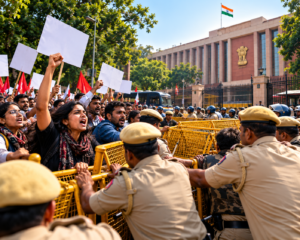
23 October को People Against SIR के banner तले करीब 250–300 protesters ने central Delhi में Election Commission of India (ECI) headquarters की तरफ march करने की कोशिश की। Delhi Police ने Bangla Sahib Gurdwara और ECI office के आसपास भारी barricading की और march को आगे बढ़ने से रोक दिया। इसके बाद 150–200 protesters को detain किए जाने की बात सामने आई, हालांकि अलग-अलग reports में detention का आंकड़ा 100 से 150+ तक बताया गया है।
Protesters की मुख्य मांग थी—Chief Election Commissioner Gyanesh Kumar का resignation और SIR को वापस लेना।
लेकिन इस घटना का सवाल सिर्फ voter-list revision तक सीमित नहीं है।
अब debate यह है कि Delhi में protest politics और electoral politics एक-दूसरे से कितनी तेजी से जुड़ रही हैं?
Bangla Sahib से ECI तक march क्यों रोका गया?
March की शुरुआत Gole Dak Khana के आसपास से हुई थी। Protesters ECI headquarters की तरफ बढ़ रहे थे।
Police ने central Delhi में कई जगह barricading की और protesters को आगे बढ़ने से रोका। Police का कहना था कि इस route पर protest से traffic और law-and-order problems पैदा हो सकती हैं। Officials के मुताबिक roads block होने से VIP movement, school buses और ambulances प्रभावित हो रहे थे।
Protesters ने इसके बावजूद आगे बढ़ने की कोशिश की और बाद में सड़क पर बैठकर “People’s Parliament” भी आयोजित किया।
यानी एक तरफ administration का argument था कि public movement और security बनाए रखना जरूरी है, जबकि protesters इसे democratic dissent को रोकने की कार्रवाई बता रहे थे।
यहीं से civil liberties का सवाल उठता है।
SIR आखिर इतना बड़ा political issue क्यों बन गया है?
SIR electoral rolls की intensive verification exercise है।
Election Commission का broad objective electoral rolls को update और verify करना है। लेकिन Opposition parties और कई civil society groups का आरोप है कि इस process में eligible voters के नाम हटने का risk पैदा हो सकता है।
Protesters इसी concern को लेकर लगातार demonstrations कर रहे हैं।
उनका आरोप है कि voter-list revision के दौरान genuine voters के नाम हट सकते हैं और इससे voting rights प्रभावित हो सकते हैं।
हालांकि यह ध्यान रखना जरूरी है कि ये protesters के allegations हैं; इन्हें established fact की तरह नहीं लिखा जाना चाहिए। Election authorities की तरफ से SIR को electoral rolls की accuracy और verification से जुड़ी exercise के रूप में प्रस्तुत किया गया है।
150–200 detentions का political message क्या है?
इस protest में reported detentions संख्या से ज्यादा महत्वपूर्ण उसका political symbolism है।
जब election-related issue पर protesters Election Commission के headquarters तक march करना चाहते हैं और police उन्हें रास्ते में रोक देती है, तो confrontation का focus voter-list से बढ़कर institutional trust पर चला जाता है।
Protesters का सवाल है:
अगर electoral process पर सवाल उठ रहे हैं, तो क्या citizens को Election Commission तक अपनी बात पहुंचाने की पर्याप्त democratic space मिलनी चाहिए?
वहीं police का argument public order और traffic management पर आधारित है।
दोनों arguments के बीच balance बनाना आने वाले समय में प्रशासन के लिए बड़ी चुनौती हो सकती है।
Opposition के लिए SIR सिर्फ voter list नहीं है
Delhi में SIR को लेकर protests में students, farmers, workers, women’s organisations और Left-linked groups सहित कई sections शामिल हुए।
23 October के march में CPI(M) नेता Brinda Karat, CPI के P. Sandosh और Annie Raja सहित कई political और social activists मौजूद थे।
इससे साफ है कि issue धीरे-धीरे एक single-party campaign से आगे बढ़कर broader opposition mobilisation का हिस्सा बन रहा है।
People Against SIR के अनुसार देशभर में 18 states के 88 cities में demonstrations का plan है, जिसमें 145 organisations के शामिल होने का दावा किया गया है।
अगर यह mobilisation लगातार बनी रहती है, तो SIR आने वाले चुनावी narrative में बड़ा political issue बन सकता है।
Delhi की protest politics फिर सड़क पर क्यों लौट रही है?
Delhi में पिछले कुछ हफ्तों से election-related protests लगातार दिखाई दे रहे हैं।
एक तरफ Opposition parties Election Commission की functioning और SIR पर सवाल उठा रही हैं।
दूसरी तरफ student organisations और civil society groups इसे voting rights और democratic participation का issue बना रहे हैं।
इससे Delhi की politics में एक interesting shift दिखाई देता है:
Parliament → Press Conference → Social Media → Street Protest
Political communication अब सिर्फ Parliament या election rallies तक सीमित नहीं है।
अगर किसी issue को public mobilisation मिल जाती है, तो वह कुछ ही घंटों में national political debate बन सकता है।
Jantar Mantar की politics से आगे क्या?
Delhi में protest geography भी बदल रही है।
जब traditional protest spaces में restrictions या limitations होती हैं, तो political groups alternative locations और marches का इस्तेमाल करने लगते हैं।
23 October के march में protesters ECI headquarters तक पहुंचने की कोशिश कर रहे थे, लेकिन police barricading के कारण उन्हें रास्ते में रोक दिया गया। बाद में उन्होंने वहीं sit-in और People’s Parliament का format अपनाया।
यह strategy आने वाले समय में ज्यादा दिखाई दे सकती है।
यानी protest का objective केवल rally करना नहीं बल्कि visual confrontation create करना भी हो सकता है—जहां police barricade, detained protesters और Election Commission का backdrop खुद political imagery बन जाते हैं।
Civil Liberties बनाम Law & Order
इस पूरे विवाद का सबसे sensitive हिस्सा यही है।
लोकतंत्र में peaceful protest नागरिकों की political expression का महत्वपूर्ण माध्यम है।
लेकिन administration को traffic, emergency services, public safety और sensitive government infrastructure की security भी maintain करनी होती है।
23 October के मामले में police ने यही justification दिया कि protesters roads block कर रहे थे और central Delhi में movement प्रभावित हो रहा था।
दूसरी तरफ protesters और civil society groups का सवाल है कि क्या administrative restrictions का इस्तेमाल political dissent को unnecessarily limit करने के लिए किया जा रहा है।
इस debate का answer सिर्फ political statements से नहीं बल्कि clear rules, proportionate policing और transparent communication से आएगा।
क्या SIR अब चुनावी campaign issue बन चुका है?
संभावना काफी मजबूत है।
अगर voter-list revision को लेकर allegations और protests अगले कुछ हफ्तों तक जारी रहते हैं, तो Opposition इसे चुनावी campaign के central issues में बदल सकती है।
इसके तीन potential political effects हो सकते हैं:
पहला — Voter mobilisation
Political parties voter verification को grassroots campaign में बदल सकती हैं।
दूसरा — Institutional trust
Election Commission की neutrality और functioning पर political debate और तेज हो सकती है।
तीसरा — Youth participation
Student groups और young activists की involvement issue को traditional party politics से बाहर भी ले जा सकती है।
यानी SIR अब सिर्फ administrative exercise नहीं रह सकती—यह political trust का test बन सकती है।
क्या Detentions protest को कमजोर करेंगी या मजबूत?
यह सबसे बड़ा uncertainty factor है।
Short-term में detentions protesters को disperse कर सकती हैं।
लेकिन political movements में detention कभी-कभी mobilisation का नया narrative भी पैदा कर देती है।
Protesters पहले से ही police action को civil liberties के सवाल से जोड़ रहे हैं। अगर ऐसी incidents बार-बार होती हैं, तो campaign का focus SIR से हटकर “right to protest” पर भी जा सकता है।
यानी administration जिस confrontation को control करना चाहता है, वही confrontation political campaign का नया symbol भी बन सकता है।
आगे क्या होगा?
People Against SIR और दूसरे organisations ने protests जारी रखने का संकेत दिया है।
23 October के demonstration के बाद भी nationwide mobilisation की planning सामने आई है।
इसलिए आने वाले दिनों में तीन चीजें सबसे ज्यादा महत्वपूर्ण रहेंगी:
1. SIR के दौरान voter verification और deletion पर नए claims
2. Election Commission की तरफ से transparency और clarification
3. Delhi Police और protest groups के बीच confrontation का अगला चरण
अगर ये तीनों developments एक साथ आगे बढ़ते हैं, तो SIR Delhi की politics में एक major electoral issue बन सकता है।
Conclusion: असली लड़ाई ECI office तक पहुंचने की नहीं, Trust की है
Bangla Sahib से Election Commission तक march को रोकना और 150–200 लोगों की reported detention सिर्फ एक day’s protest story नहीं है।
यह उस larger political conflict का हिस्सा है जिसमें एक तरफ electoral roll revision और election administration है और दूसरी तरफ voter rights, institutional trust और protest politics।
Police के लिए सवाल है कि sensitive areas में law and order कैसे maintain किया जाए।
Protesters के लिए सवाल है कि electoral process पर उठ रही concerns को सरकार और Election Commission तक किस तरह पहुंचाया जाए।
और जनता के लिए सबसे बड़ा सवाल है:
क्या electoral reforms पर disagreement democratic dialogue के जरिए सुलझेगा या Delhi की politics आने वाले दिनों में और ज्यादा सड़क पर दिखाई देगी?
2027 के चुनावी माहौल की तरफ बढ़ते India में SIR अब सिर्फ voter-list exercise नहीं दिख रही।
यह धीरे-धीरे political trust का बड़ा test बनती जा रही है।