‘Supreme Court को Politics में मत घसीटिए’: CJI Surya Kant की टिप्पणी का असली Political Message क्या है?
Location: New Delhi
Delhi में Chief Election Commissioner Gyanesh Kumar के खिलाफ चल रहे Opposition protests के बीच Chief Justice of India Surya Kant की एक टिप्पणी ने political और legal debate को नया direction दे दिया है।
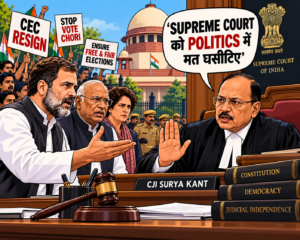
12 October 2026 को Supreme Court में सुनवाई के दौरान CJI Surya Kant ने कहा कि democratic activities और protests हो सकते हैं, लेकिन Supreme Court को political contest में नहीं खींचा जाना चाहिए और court की functioning, lawyers, staff तथा litigants की movement प्रभावित नहीं होनी चाहिए।
यह टिप्पणी ऐसे समय आई जब Rahul Gandhi और Mallikarjun Kharge समेत Opposition leaders ने CJI से मिलने और CEC Gyanesh Kumar के खिलाफ अपनी concerns का memorandum देने की कोशिश की थी। CJI ने meeting request स्वीकार नहीं की और संकेत दिया कि जिन मुद्दों पर cases pending हैं, उन्हें judicial process के जरिए उठाया जाना चाहिए।
तो क्या CJI का message Opposition के लिए political setback है? या यह Supreme Court की institutional boundary को लेकर एक broader constitutional statement है?
विवाद की शुरुआत कहां से हुई?
पूरा विवाद Special Intensive Revision यानी SIR और Chief Election Commissioner Gyanesh Kumar से जुड़े आरोपों के आसपास घूम रहा है।
Opposition parties ने electoral rolls की revision process पर सवाल उठाते हुए “vote chori” जैसे आरोप लगाए और CEC के resignation की मांग की।
इसके बाद Delhi में protests और political mobilisation तेज हुई। Opposition का आरोप है कि electoral process में transparency और voter rights से जुड़े serious questions हैं।
दूसरी तरफ Election Commission ने इन आरोपों को स्वीकार नहीं किया है और कहा है कि electoral-roll revision एक established legal process है।
इसी political confrontation के बीच मामला Supreme Court तक पहुंचा।
CJI ने Opposition की meeting क्यों नहीं की?
Rahul Gandhi और Mallikarjun Kharge ने CJI Surya Kant से एक meeting का request किया था।
उनका उद्देश्य था कि CEC की functioning, alleged electoral irregularities और SIR से जुड़े concerns को सीधे Chief Justice के सामने रखा जाए।
लेकिन CJI ने meeting से इनकार किया।
Reportedly इसका एक बड़ा कारण यह था कि संबंधित matters पहले से Supreme Court के judicial side पर pending थे। CJI ने संकेत दिया कि अगर किसी constitutional या fundamental-rights issue पर judicial intervention चाहिए, तो appropriate legal petition के माध्यम से court का दरवाजा खटखटाया जा सकता है।
यह distinction बेहद महत्वपूर्ण है।
Political memorandum और judicial petition एक ही चीज नहीं हैं।
Court किसी political delegation के साथ negotiation नहीं करता। Court evidence, pleadings और legal arguments के आधार पर फैसला करता है।
“Supreme Court को Politics में मत घसीटिए” का असली मतलब
CJI की टिप्पणी को सीधे Opposition के खिलाफ political statement मानना सही नहीं होगा।
असल message institutional है।
CJI ने यह नहीं कहा कि protests नहीं होने चाहिए।
इसके उलट उन्होंने स्पष्ट किया कि democratic activities और protests हो सकते हैं। लेकिन protest इस तरह नहीं होना चाहिए कि Supreme Court की functioning बाधित हो या lawyers, litigants और court staff को परेशानी हो।
यानी Court ने दो principles को एक साथ रखने की कोशिश की:
Right to protest + Institutional independence
यही इस पूरे विवाद का सबसे महत्वपूर्ण constitutional angle है।
क्या Supreme Court ने Protest Politics को reject किया?
नहीं।
यह distinction समझना जरूरी है।
Supreme Court ने democratic protest के अधिकार को खत्म करने की बात नहीं कही। उसी period में Court की दूसरी proceedings में peaceful और unarmed protesters की detention तथा movement restrictions से जुड़े सवाल भी उठे।
एक special bench ने authorities को peaceful protesters के rights और movement से जुड़े निर्देश दिए तथा यह स्पष्ट किया कि लोगों को कानून के मुताबिक ही detain किया जा सकता है।
इससे Supreme Court का overall approach दो स्तरों पर दिखाई देता है:
Protest का constitutional right सुरक्षित रहे।
लेकिन
Court परिसर और judicial functioning political mobilisation का venue न बनें।
Rahul Gandhi के लिए इसका political meaning क्या है?
Opposition के लिए यह situation complicated है।
एक तरफ Supreme Court में SIR और electoral-process से जुड़े petitions सुनवाई में हैं। दूसरी तरफ Opposition street politics के जरिए इस मुद्दे को public pressure में बदलना चाहता है।
Rahul Gandhi के लिए challenge यह है कि वह political campaign और judicial process के बीच balance कैसे बनाए रखें।
अगर protest को purely political movement रखा जाता है, तो वह public mobilisation का tool बन सकता है।
लेकिन अगर Supreme Court को उसी political campaign का direct platform बनाने की कोशिश की जाती है, तो judiciary की institutional neutrality का सवाल उठ सकता है।
CJI का statement इसी boundary की तरफ संकेत करता है।
क्या Court Opposition के मुद्दे पर सुनवाई नहीं करेगा?
ऐसा कहना गलत होगा।
Supreme Court ने SIR और CEC से जुड़े matters को entertain किया है।
15 October को CJI Surya Kant और Justice Joymalya Bagchi की bench ने SIR से संबंधित petitions पर Election Commission और CEC Gyanesh Kumar समेत respondents को notice जारी किया था। Court ने अलग-अलग petitions को existing matter के साथ tag करने की प्रक्रिया भी आगे बढ़ाई।
इसका अर्थ साफ है:
Court political allegations को automatically reject नहीं कर रहा।
लेकिन Court यह तय करना चाहता है कि उन allegations की जांच judicial procedure के माध्यम से हो, political pressure के जरिए नहीं।
“Vote Chori” से Courtroom तक कैसे पहुंचा मामला?
Opposition का “vote chori” campaign अब street politics से judicial scrutiny तक पहुंच चुका है।
Opposition petitions में SIR और electoral-roll decisions को लेकर कई सवाल उठाए गए हैं। वहीं Election Commission का पक्ष है कि उसके decisions established electoral framework के भीतर लिए गए हैं और कई allegations में context का एक हिस्सा ही सामने रखा गया है।
इसलिए Supreme Court के सामने अब एक fundamental question है:
क्या Election Commission के disputed decisions Constitution, relevant law और established procedure के अनुरूप लिए गए थे?
इसका जवाब political speeches नहीं, बल्कि court में पेश किए जाने वाले records और legal arguments तय करेंगे।
Judiciary की Neutrality क्यों महत्वपूर्ण है?
भारत में Supreme Court सिर्फ एक court नहीं है।
यह constitutional institution है।
अगर political parties सीधे court को political campaign का हिस्सा बनाने लगें, तो judiciary की neutrality पर सवाल उठ सकते हैं।
दूसरी तरफ अगर political protests और criticism को completely suppress किया जाए, तो democratic dissent और freedom of expression को लेकर concerns पैदा हो सकते हैं।
इसलिए balance मुश्किल है।
Court को political pressure से स्वतंत्र भी रहना है और constitutional rights की रक्षा भी करनी है।
CJI Surya Kant की टिप्पणी इसी institutional balancing act को सामने लाती है।
क्या Opposition को Supreme Court के बाहर Protest नहीं करना चाहिए?
ऐसा भी नहीं है।
Political parties को peaceful democratic protest करने का अधिकार है, subject to applicable law and reasonable restrictions.
लेकिन protest का venue और तरीका महत्वपूर्ण हो जाता है।
Supreme Court परिसर या उसके immediate functioning zone में ऐसी political mobilisation जो court access या judicial work को प्रभावित करे, institution के लिए अलग concern पैदा करती है।
CJI ने भी इसी distinction पर जोर दिया—democratic activity हो सकती है, लेकिन court functioning बाधित नहीं होनी चाहिए।
BJP के लिए इसका क्या मतलब है?
BJP के लिए यह situation दोधारी है।
एक तरफ Opposition का Supreme Court march और CEC controversy सरकार और Election Commission पर political pressure बढ़ा रहा है।
दूसरी तरफ अगर Supreme Court खुद institutional boundaries पर जोर देता है, तो Opposition की कोशिशों को judicial legitimacy automatically नहीं मिलती।
लेकिन BJP के लिए भी यह जरूरी है कि वह Supreme Court की टिप्पणी को political victory की तरह overstate न करे।
क्योंकि Court SIR और electoral-roll issues पर judicial examination कर रहा है।
यानी CJI का “court को politics में मत घसीटिए” कहना किसी particular party के पक्ष या विपक्ष में फैसला नहीं है।
यह institution और political process के बीच boundary को लेकर टिप्पणी है।
क्या Judiciary और Politics की दूरी और बढ़ेगी?
यह आने वाले महीनों का बड़ा सवाल है।
2027 के Assembly elections से पहले electoral-roll revision, voter verification और Election Commission की credibility जैसे मुद्दे political campaigns के केंद्र में रह सकते हैं।
अगर Opposition इन मुद्दों को लगातार Supreme Court में उठाता है और government तथा Election Commission इसका legal defence करते हैं, तो judiciary indirectly electoral debate का महत्वपूर्ण arena बन सकती है।
ऐसे में Court के लिए सबसे बड़ी चुनौती होगी:
Political controversy को constitutional adjudication से अलग रखना।
Supreme Court के लिए असली Test क्या है?
इस पूरे विवाद में Supreme Court के सामने केवल एक political controversy नहीं है।
तीन बड़े institutional questions हैं:
पहला — Electoral transparency:
क्या voter-list revision transparent और legally compliant है?
दूसरा — Right to protest:
क्या peaceful protesters के fundamental rights सुरक्षित हैं?
तीसरा — Judicial independence:
क्या Supreme Court political pressure और institutional disruption से स्वतंत्र रहकर इन मामलों की सुनवाई कर सकता है?
इन तीनों के बीच balance ही Court की credibility का असली test होगा।
Conclusion: CJI का Message Opposition से ज्यादा Institutions के लिए?
CJI Surya Kant की “Supreme Court को politics में मत घसीटिए” वाली टिप्पणी को सिर्फ Opposition को दिया गया political message मानना शायद इस पूरे development को छोटा करके देखना होगा।
असल में यह एक larger institutional warning है।
Political parties protest कर सकती हैं।
Government की criticism कर सकती हैं।
Election Commission पर सवाल उठा सकती हैं।
लेकिन जब मामला Supreme Court पहुंचता है, तो political pressure की जगह constitutional process को आगे आना पड़ता है।
दिलचस्प बात यह है कि Supreme Court एक तरफ peaceful protest और fundamental rights की protection पर जोर दे रहा है, वहीं दूसरी तरफ अपने परिसर और functioning को political battlefield बनने से रोकने की कोशिश कर रहा है।
2027 elections की तरफ बढ़ते India में यह distinction और महत्वपूर्ण हो सकती है।
क्योंकि आने वाले महीनों में सवाल सिर्फ यह नहीं होगा कि किसके कितने votes हैं।
सवाल यह भी होगा कि electoral institutions, political parties और judiciary के बीच constitutional boundaries कितनी मजबूत रहती हैं।