Delhi में Election Commission Protest: Rahul Gandhi और Opposition की नई Political Strategy क्या है?
Keywords: Delhi Election Commission Protest 2026, Rahul Gandhi Protest, Gyanesh Kumar, Election Commission SIR, INDIA Bloc Protest, Vote Chori, Indian Politics 2026, Supreme Court SIR
Delhi में सड़क से Supreme Court तक पहुंचा राजनीतिक संघर्ष
October 2026 में Delhi की politics का सबसे बड़ा flashpoint अब सिर्फ Parliament या election rallies नहीं, बल्कि Election Commission और voter-list revision बन गया है।
INDIA bloc ने Chief Election Commissioner Gyanesh Kumar के खिलाफ लगातार protests किए हैं। Opposition की मुख्य मांगों में CEC का resignation, Special Intensive Revision यानी SIR को रोकना और alleged electoral irregularities की independent जांच शामिल है।
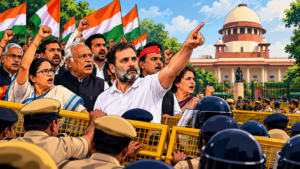
6 October से शुरू हुए protests के बाद Rahul Gandhi और INDIA bloc के नेताओं ने Election Commission तक march करने की कोशिश की। इसके बाद 12 October को Opposition ने अपना protest सीधे Supreme Court तक ले जाने की कोशिश की और संयुक्त petition भी दाखिल की।
इससे Rahul Gandhi की current political strategy का एक नया pattern दिखाई देता है:
Street Protest → Opposition Unity → Legal Route → National Narrative
Rahul Gandhi की Strategy में क्या बदल गया?
Rahul Gandhi लंबे समय से Election Commission और electoral process को लेकर सवाल उठा रहे हैं। लेकिन SIR controversy ने इस campaign को ज्यादा organised political movement में बदलने का मौका दिया है।
अब strategy केवल press conference या Parliament speech तक सीमित नहीं है।
एक तरफ INDIA bloc MPs Delhi की streets पर mobilisation कर रहे हैं, दूसरी तरफ senior Opposition leaders joint meetings कर रहे हैं और legal route भी अपनाया जा रहा है।
12 October के march में Rahul Gandhi के साथ Mallikarjun Kharge, Akhilesh Yadav, Mamata Banerjee, D Raja, Tejashwi Yadav और Supriya Sule सहित कई Opposition leaders दिखाई दिए।
यह Rahul Gandhi के लिए important है क्योंकि CEC या SIR का मुद्दा अगर केवल Congress का campaign दिखाई देता है, तो उसका national impact सीमित हो सकता है।
लेकिन जब SP, TMC, RJD, Left और दूसरे INDIA bloc partners साथ दिखाई देते हैं, तो इसे broader Opposition issue के रूप में project किया जा सकता है।
CEC Resignation की Demand क्यों Central Issue बन गई?
INDIA bloc अब सिर्फ SIR की process पर सवाल नहीं उठा रहा।
Opposition ने CEC Gyanesh Kumar के resignation को भी campaign का central demand बना दिया है।
Congress और उसके allies का आरोप है कि electoral-roll revision में serious irregularities हुई हैं और Election Commission की institutional credibility पर सवाल खड़े हुए हैं।
6 October को Opposition MPs ने Election Commission office की ओर march किया था और Rahul Gandhi सहित कई नेताओं को police ने detain किया था।
इसके बाद 12 October का Supreme Court march इस campaign का escalation था।
यानी political messaging अब यह नहीं है कि:
“SIR पर हमारी आपत्ति है।”
बल्कि narrative बन गया है:
“Electoral institution पर भरोसा कैसे कायम रहेगा?”
यही shift इस protest को ज्यादा politically consequential बनाता है।
Supreme Court Route क्यों महत्वपूर्ण है?
Opposition के लिए court route का सबसे बड़ा फायदा यह है कि protest को सिर्फ political allegation के बजाय formal legal challenge का रूप दिया जा सकता है।
12 October को INDIA bloc leaders ने Supreme Court के सामने अपनी concerns रखने और SIR तथा electoral irregularities पर joint petition दाखिल करने की कोशिश की।
हालांकि यहां एक important development भी है।
Supreme Court registry ने Opposition petition में 14 defects flag किए, जिनमें court fee में कमी, Mallikarjun Kharge के identity document की illegible copy और कुछ petitioners के vakalatnama से जुड़े issues शामिल थे। इसलिए इसे अभी judicial victory या court द्वारा allegations स्वीकार किए जाने के रूप में पेश करना सही नहीं होगा।
यानी legal battle अभी शुरुआती stage में है।
CJI से Meeting नहीं हुई—फिर भी Opposition ने क्या हासिल किया?
Opposition leaders Supreme Court जाकर Chief Justice of India से मिलने और memorandum देने की कोशिश कर रहे थे। लेकिन CJI ने meeting request स्वीकार नहीं की।
इसके बावजूद Rahul Gandhi ने publicly कहा कि Opposition अपना memorandum और concerns judicial route के जरिए आगे बढ़ाएगा।
Political messaging के लिहाज से यह महत्वपूर्ण है।
क्योंकि Opposition अब यह दिखाने की कोशिश कर रहा है कि:
अगर institutional dialogue मुश्किल है, तो public mobilisation और legal process दोनों जारी रहेंगे।
यह strategy सरकार और Election Commission पर political pressure बनाए रखने का तरीका भी है।
Festive Season में Protest रोकना क्या Retreat है?
14 October को INDIA bloc ने Delhi में अपने लगातार daily marches को festive season के कारण temporarily pause करने का फैसला किया।
यह decision पहली नजर में campaign slowdown जैसा दिखाई दे सकता है।
लेकिन political strategy के हिसाब से इसे retreat मानना जरूरी नहीं है।
Reports के मुताबिक Rahul Gandhi और Opposition leaders ने फैसला किया कि festive period में daily protests की बजाय campaign को less frequent लेकिन strategically important demonstrations के रूप में जारी रखा जाएगा।
इसका फायदा यह हो सकता है कि protest fatigue कम हो।
लगातार रोज सड़क पर उतरने से कुछ समय बाद media attention भी कम हो सकती है। इसके बजाय major political moments पर बड़े demonstrations करने से campaign को फिर से headline space मिल सकता है।
इसलिए strategy शायद:
Daily Protest → Strategic Protest
की तरफ बढ़ रही है।
Opposition Unity का असली Test
INDIA bloc की सबसे बड़ी challenge सिर्फ BJP का मुकाबला करना नहीं है।
Challenge यह है कि अलग-अलग राज्यों में अलग political interests रखने वाली parties को एक common issue पर लंबे समय तक साथ रखा जाए।
Delhi protest में SP, TMC, RJD, Left और अन्य parties की participation ने unity का visual जरूर बनाया है। लेकिन यह unity electoral alliance में कितनी बदलती है, यह अलग सवाल है।
अगर SIR issue पर Opposition लगातार coordinated campaign चलाता है, तो Rahul Gandhi इसे एक common democratic rights issue के रूप में nationalise कर सकते हैं।
लेकिन अगर parties अलग-अलग political priorities के कारण अलग रास्ते अपनाने लगती हैं, तो campaign की momentum कमजोर हो सकती है।
यही कारण है कि Rahul Gandhi की current strategy में joint mobilisation सबसे important element है।
BJP और Government के लिए इसका जवाब क्या है?
BJP और Election Commission Opposition के allegations को reject कर रहे हैं।
Government-side narrative यह है कि electoral rolls की cleaning और verification democratic process का हिस्सा है और Opposition इस administrative exercise को political controversy में बदल रहा है।
BJP का counter-argument भी यही है कि Opposition Election Commission जैसी constitutional institution की credibility को राजनीतिक लाभ के लिए target कर रहा है।
इससे एक interesting political situation बन गई है:
Opposition का objective:
Election Commission पर public pressure बढ़ाना।
BJP/EC का objective:
SIR को legitimate electoral-roll exercise के रूप में defend करना।
इस battle में facts, voter-roll data और legal findings आने वाले समय में सबसे ज्यादा महत्वपूर्ण होंगे।
Rahul Gandhi के लिए Political Opportunity क्या है?
Rahul Gandhi के सामने यहां एक बड़ा political opportunity भी है।
अगर वह SIR को केवल Congress issue के बजाय voter rights और democratic accountability का issue बना पाते हैं, तो इसका appeal traditional Congress voters से बाहर भी जा सकता है।
Student groups, civil society और regional Opposition parties को साथ लाने की कोशिश इसी broader strategy का हिस्सा दिखाई देती है।
हाल के protests में youth groups और civil-society participants की मौजूदगी ने भी इस campaign को traditional party politics से आगे बढ़ाया है।
लेकिन यहां सबसे बड़ा risk भी है।
अगर campaign लगातार political slogans और allegations तक सीमित रहा, तो BJP इसे partisan campaign के रूप में आसानी से counter कर सकती है।
अगर Opposition concrete voter data, documented cases और legal evidence के साथ आगे बढ़ता है, तो narrative ज्यादा मजबूत हो सकता है।
क्या यह 2027 Elections की तैयारी भी है?
यह सबसे बड़ा political question है।
2027 में कई महत्वपूर्ण state elections होने हैं। ऐसे में voter-list और electoral process से जुड़ा मुद्दा Opposition के लिए campaign infrastructure बनाने का अवसर भी बन सकता है।
लेकिन इसे सीधे 2027 election strategy कहना अभी जल्दबाजी होगी।
फिलहाल ज्यादा accurate यह है कि Opposition electoral credibility को एक common national issue बनाने की कोशिश कर रहा है।
अगर यह campaign लंबे समय तक चलता है और local-level voter concerns से जुड़ता है, तो इसका electoral impact 2027 तक पहुंच सकता है।
Final Take
Delhi का Election Commission protest अब सिर्फ एक demonstration नहीं रह गया है।
Rahul Gandhi और INDIA bloc ने इसे चार स्तरों पर expand किया है:
1. Street Politics — Delhi में लगातार protests और marches
2. Opposition Unity — कई INDIA bloc parties को एक platform पर लाना
3. Legal Route — Supreme Court में joint challenge
4. Public Narrative — SIR को voter rights और electoral credibility से जोड़ना
Festive season में daily protests को pause करना भी campaign के खत्म होने का संकेत नहीं है। यह ज्यादा likely tactical reset है, जिसमें Opposition रोज के demonstrations की जगह selective high-impact mobilisation पर focus करेगा।
अब असली सवाल यह नहीं है कि Delhi में अगला protest कब होगा।
असली सवाल है:
क्या Rahul Gandhi SIR और Election Commission के मुद्दे को एक sustained national political movement में बदल पाएंगे?
अगर हां, तो यह campaign Congress और INDIA bloc की broader Opposition strategy के लिए बड़ा turning point बन सकता है।
अगर नहीं, तो लगातार protests एक short-term political confrontation बनकर रह सकते हैं।
फिलहाल एक बात साफ है—Election Commission अब 2026 की Indian politics में सिर्फ एक constitutional institution नहीं, बल्कि Opposition और BJP के बीच बड़े political contest का central battlefield बन चुका है।