Microsoft से Infosys तक Indian IT Companies पर US Green Card Suspension का असर: क्या Indian Tech Talent के लिए बदल रहा है Global Career Model?
Keywords: US Green Card Suspension, Indian IT, Infosys, TCS, Microsoft, H1B, Indian Tech Talent
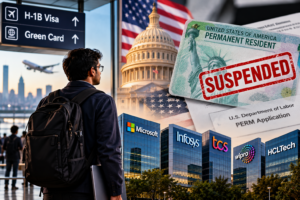
अमेरिका में काम करने वाले Indian tech professionals के लिए October 2026 एक बड़ा turning point बनकर सामने आया है। Trump administration ने Microsoft, Adobe, Cognizant, Infosys, Tata Consultancy Services (TCS), Wipro, HCL Technologies और Capgemini को US के Permanent Labor Certification यानी PERM programme से suspend कर दिया है।
इस decision के तहत US Department of Labor इन कंपनियों से जुड़ी नई PERM applications accept नहीं करेगा और pending applications को भी process नहीं करेगा। PERM employment-based Green Card process का एक महत्वपूर्ण चरण है।
लेकिन इसका मतलब यह नहीं है कि इन companies में काम करने वाले सभी Indian employees का H-1B visa या US status तुरंत खत्म हो गया है। भारत के Ministry of External Affairs ने भी स्पष्ट किया है कि PERM और H-1B अलग immigration programmes हैं और PERM suspension अपने आप existing H-1B visas को invalidate नहीं करता।
फिर सवाल यह है कि इस decision को Indian IT industry के लिए इतना बड़ा issue क्यों माना जा रहा है?
PERM आखिर है क्या?
PERM यानी Permanent Labor Certification US employment-based Green Card process का एक महत्वपूर्ण शुरुआती चरण है।
जब कोई US employer किसी foreign worker को employment-based permanent residency के लिए sponsor करना चाहता है, तो सामान्य तौर पर employer को Labor Department के सामने यह demonstrate करना होता है कि उस particular position के लिए योग्य US workers उपलब्ध नहीं हैं और foreign worker की hiring से US labor market को नुकसान नहीं होगा।
PERM approval के बाद employer आगे immigration process में I-140 जैसे stages की ओर बढ़ सकता है।
इसलिए PERM रुकने का मतलब है कि affected companies के कई foreign employees के लिए temporary work status से permanent residency की journey में एक महत्वपूर्ण रास्ता block हो गया है।
किन Companies पर लगा Suspension?
US action में कुल आठ major technology companies शामिल हैं:
- Microsoft
- Adobe
- Cognizant
- Infosys
- Tata Consultancy Services (TCS)
- Wipro
- HCL Technologies
- Capgemini
इनमें चार बड़ी Indian IT-linked companies—TCS, Infosys, Wipro और HCLTech—हैं।
Microsoft और Adobe US technology companies हैं, जबकि Cognizant और Capgemini global IT services businesses हैं।
US administration ने इस action को foreign-worker hiring और PERM system के alleged misuse से जोड़ते हुए American workers की protection की बात कही है। Microsoft को लेकर administration की criticism विशेष रूप से तीखी रही है।
हालांकि companies ने इस characterization को स्वीकार नहीं किया है। Microsoft ने कहा है कि उसकी workforce strategy में American hiring महत्वपूर्ण है और उसके H-1B applications का बड़ा हिस्सा existing employees से संबंधित था।
Indian IT Workers पर सबसे बड़ा असर क्या होगा?
सबसे बड़ा impact उन employees पर हो सकता है जो US में H-1B जैसे temporary work status पर हैं और employer-sponsored Green Card process शुरू करने या आगे बढ़ाने की स्थिति में थे।
खासकर वे professionals ज्यादा vulnerable हो सकते हैं जिनका H-1B six-year limit के करीब है और जिनकी long-term stay strategy employment-based Green Card process पर निर्भर करती है।
PERM suspension ऐसे workers के लिए timeline को disrupt कर सकता है क्योंकि नया PERM file या pending PERM process आगे नहीं बढ़ पाएगा।
लेकिन यहां एक important distinction जरूरी है।
PERM suspension = H-1B cancellation नहीं।
Existing H-1B holders automatically illegal status में नहीं आते और न ही इस announcement का मतलब immediate deportation है। असर मुख्य रूप से permanent residency pathway और future immigration planning पर है।
क्या लाखों Indian Tech Workers प्रभावित होंगे?
Headline impact बड़ा है, लेकिन actual immediate corporate impact उतना बड़ा नहीं दिख रहा।
Indian IT companies ने पिछले कुछ वर्षों में US immigration programmes पर अपनी dependency कम की है। Companies ने US में local hiring, acquisitions और nearshore/offshore delivery models पर ज्यादा focus किया है।
Reuters के अनुसार analysts का मानना है कि Indian IT companies पर immediate financial impact limited रहने की संभावना है। TCS ने भी कहा है कि PERM का उसका इस्तेमाल हाल के वर्षों में काफी कम रहा है और company की workforce strategy में बड़े बदलाव की जरूरत नहीं दिखती।
सबसे striking data यह है कि TCS, Infosys, Wipro और HCLTech ने FY2026 के पहले नौ महीनों में कुल मिलाकर केवल 61 certified PERM cases दर्ज किए थे—इनमें HCL America के 59 और TCS के 2 cases थे, जबकि Infosys और Wipro के recorded certified cases zero थे।
इससे एक महत्वपूर्ण बात सामने आती है:
Corporate revenue पर immediate impact सीमित हो सकता है, लेकिन employees के long-term immigration plans पर uncertainty काफी बड़ी हो सकती है।
TCS और Infosys के लिए Business Impact क्यों सीमित हो सकता है?
Indian IT companies पहले ही US market में एक structural बदलाव कर चुकी हैं।
पहले business model काफी हद तक था:
India Talent → H-1B → US Client Location
लेकिन अब model तेजी से बदल रहा है:
India Delivery Centres + US Local Hiring + Nearshore Centres + Global Delivery
TCS जैसे companies US में local workforce बढ़ाने की strategy पर पहले से काम कर रहे हैं। Reuters के अनुसार TCS अगले पांच वर्षों में America में 15,000 additional employees hire करने की योजना की बात कर चुका है।
इसलिए PERM suspension का immediate delivery impact relatively low रह सकता है।
लेकिन इसका दूसरा side ज्यादा interesting है।
अगर companies Indian professionals को US में relocate करने के बजाय India से projects deliver करवाती हैं, तो इसका फायदा Indian Global Capability Centres, engineering teams और technology ecosystem को मिल सकता है।
क्या Indian IT का “Global Career Model” बदल रहा है?
यहीं इस पूरे development का सबसे बड़ा सवाल है।
पिछले दो दशकों में Indian IT talent के लिए एक familiar career path रहा है:
India → H-1B → US Assignment → Green Card → Long-term US Career
लेकिन यह model अब पहले जितना predictable नहीं रहा।
H-1B scrutiny, visa costs, immigration restrictions और अब selected employers के लिए PERM suspension ने companies और employees दोनों को alternative strategies पर सोचने के लिए मजबूर किया है।
Future model कुछ ऐसा हो सकता है:
India → Global Project → Remote/Hybrid Delivery → International Mobility → Multiple Country Options
यानी career का centre केवल America नहीं रहेगा।
India के लिए यह Threat है या Opportunity?
दोनों।
Short term में Indian professionals के लिए uncertainty बढ़ सकती है।
अगर US में permanent residency की process increasingly difficult होती है, तो talented professionals Canada, UK, Europe, Australia, Singapore या Middle East जैसे markets को alternative career destinations के रूप में देख सकते हैं।
लेकिन दूसरी तरफ India को इसका बड़ा opportunity भी मिल सकता है।
अगर highly skilled professionals US relocate करने के बजाय India में रहकर global projects पर काम करते हैं, तो Indian technology ecosystem में:
- Senior engineering talent
- AI specialists
- Product development teams
- Global Capability Centres
- R&D operations
- Deep-tech startups
- Enterprise technology services
का expansion तेज हो सकता है।
Zerodha के Dinesh Pai ने भी इसी possibility की ओर इशारा किया है कि अगर US companies के लिए foreign talent को America लाना कठिन होता है, तो work और technology operations का कुछ हिस्सा India में shift हो सकता है।
Indian IT Companies के लिए नया Strategy Model
US immigration restrictions Indian IT companies को तीन directions में push कर सकती हैं।
1. Local Hiring
US clients के लिए US-based workforce बढ़ाना।
इससे visa dependency घटती है, लेकिन salary और operating costs बढ़ सकते हैं।
2. Offshore Delivery
High-value technology work को India से deliver करना।
इस model में India का cost advantage और huge technical talent pool दोनों काम आते हैं।
3. Multi-Country Talent Strategy
India के साथ Poland, Mexico, Canada, UK, Eastern Europe, Middle East और Asia-Pacific जैसे locations में talent hubs बनाना।
इससे किसी एक country’s immigration policy पर dependency कम होती है।
Indian IT companies पिछले कुछ वर्षों से इन directions में move कर रही हैं।
Microsoft के मामले में क्या अलग है?
Microsoft का case Indian IT companies से थोड़ा अलग है।
US administration ने Microsoft को PERM suspension के साथ विशेष रूप से target किया और company पर foreign-worker system के misuse से जुड़े आरोप लगाए।
Ironically, इसी period में Microsoft CEO Satya Nadella को US President Donald Trump ने National Medal of Technology and Innovation से सम्मानित भी किया।
इससे US technology policy की complexity सामने आती है—एक तरफ America global technology leadership और innovation को reward करना चाहता है, दूसरी तरफ foreign skilled workers पर restrictions बढ़ा रहा है।
क्या US इससे American Jobs बढ़ा पाएगा?
US administration का argument है कि companies को American workers को priority देनी चाहिए और foreign-worker programmes के misuse को रोकना चाहिए।
लेकिन technology industry का counterargument यह है कि highly specialised skills की global demand को केवल immigration restrictions से manage करना आसान नहीं होगा।
अगर companies को required talent America में नहीं मिलता, तो उनके पास तीन options हो सकते हैं:
Hire locally → Work becomes expensive
Move talent to other countries → Global hiring increases
Move work itself → Offshore delivery grows
यही तीसरा possibility India के लिए सबसे interesting हो सकती है।
Indian Tech Talent के लिए Career Strategy कैसे बदल सकती है?
Indian professionals के लिए शायद सबसे बड़ा lesson यह है कि एक country और एक visa pathway पर पूरी career strategy depend करना risky हो सकता है।
Future-ready technology professional के लिए:
- AI और automation skills
- Cloud architecture
- Cybersecurity
- Data engineering
- Product development
- Global communication
- Remote collaboration
- Multi-market experience
जैसी capabilities ज्यादा valuable हो सकती हैं।
अगर US immigration pathway unpredictable होता है, तो professional के पास India में high-value role, remote global role या दूसरे international market में move करने के options होने चाहिए।
यानी future में “US job” से ज्यादा important “global employability” हो सकती है।
Indian IT Stocks पर क्या असर पड़ेगा?
Stock market के नजरिए से immediate impact limited दिखाई दिया है।
Reuters ने बताया कि analysts ने Indian IT companies के earnings पर immediate material impact की उम्मीद नहीं जताई। Companies की lower immigration dependency और increased local hiring ने risk को कुछ हद तक absorb किया है।
लेकिन longer term में costs बढ़ सकते हैं।
अगर companies को US में ज्यादा local employees hire करने पड़ते हैं, तो wage costs बढ़ सकती हैं। वहीं retention के लिए compensation और benefits बढ़ाने की जरूरत भी पड़ सकती है।
Analysts ने ऐसे additional costs से margins पर potential pressure की संभावना जताई है।
इसलिए investors के लिए बड़ा सवाल PERM applications की संख्या नहीं बल्कि यह होगा कि US talent strategy बदलने की total cost कितनी बढ़ती है।
असली कहानी Green Card से बड़ी है
US का latest PERM suspension केवल immigration policy का मामला नहीं है।
यह global technology talent के geography में बदलाव का संकेत भी हो सकता है।
अगर America skilled foreign workers के लिए pathways लगातार restrictive करता है, तो companies अपने global delivery models को redesign करेंगी।
और India इस transformation में केवल talent supplier नहीं रहेगा।
India increasingly बन सकता है:
Talent Hub + R&D Hub + AI Hub + Global Delivery Hub
यानी जिस talent को कभी Indian IT companies America भेजती थीं, उसी talent को future में India में रखकर America और बाकी दुनिया के projects deliver किए जा सकते हैं।
Conclusion
Microsoft, Infosys, TCS, Wipro, HCLTech, Cognizant, Adobe और Capgemini पर PERM suspension ने Indian IT industry के सामने एक बड़ा question जरूर खड़ा किया है—क्या global technology career का traditional US-centric model अब बदल रहा है?
Immediate business impact शायद limited रहे, क्योंकि Indian IT companies ने पहले ही H-1B और PERM dependency कम करके local hiring और offshore delivery को बढ़ाया है।
लेकिन employees के लिए कहानी अलग है।
जिस professional ने कई साल US में काम करके Green Card को अपनी long-term career plan का हिस्सा बनाया था, उसके लिए PERM suspension uncertainty बढ़ाता है।
और यही इस development का सबसे बड़ा impact है।
Indian IT की अगली growth story शायद केवल “Indian talent going global” नहीं होगी।
बल्कि:
“Indian talent staying in India and delivering globally.”
अगर US immigration policies skilled foreign talent के लिए लगातार tougher होती हैं, तो आने वाले वर्षों में India का सबसे बड़ा advantage केवल low-cost IT services नहीं, बल्कि high-skilled global technology talent का domestic ecosystem हो सकता है।