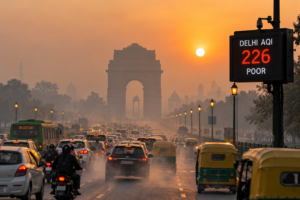
Delhi AQI 226: Winter Pollution से पहले Government कितनी तैयार? GRAP से क्या बदलेगा?
Location: New Delhi, Delhi
Delhi में इस साल winter pollution season ने दस्तक दे दी है। 21 October को राजधानी का air quality index पहली बार इस season में ‘Poor’ category में पहुंचा और daily average AQI 245 दर्ज किया गया। अगले दिन, 22 October की सुबह भी AQI करीब 226 रहा। इसके बाद authorities ने NCR में GRAP Stage-I के तहत pollution-control measures लागू कर दिए हैं।
अब सवाल सिर्फ इतना नहीं है कि Delhi की हवा कितनी खराब होगी।
बड़ा सवाल यह है कि क्या इस बार government winter pollution आने से पहले तैयार है, या Delhi फिर वही annual pollution cycle दोहराएगी?
AQI 226 या 245 का मतलब क्या है?
Central Pollution Control Board के मुताबिक AQI 201 से 300 के बीच Poor category में आता है।
21 October की सुबह Delhi में hourly AQI 227 तक पहुंच गया था। दिन के दौरान pollution और बढ़ा और 2 PM पर AQI 244 तथा 4 PM पर daily average 245 दर्ज हुआ। यह इस season का पहला Poor-category day था।
इसके मुकाबले 20 October को AQI 179 यानी Moderate category में था।
यानी सिर्फ एक दिन में air quality ने बड़ा jump लिया।
22 October की सुबह भी AQI 226 दर्ज होने से संकेत मिला कि deterioration सिर्फ temporary spike नहीं है।
Pollution अचानक क्यों बढ़ा?
Delhi की pollution story किसी एक source से नहीं बनती।
इस समय कई factors एक साथ काम कर रहे हैं।
Vehicles + Road Dust + Construction + Waste Burning + Industrial Emissions + Weather Conditions + Stubble Burning
इनमें मौसम का role खास है।
जैसे-जैसे temperature गिरता है और winds कमजोर होती हैं, pollutants का dispersion कम हो सकता है। इससे pollution ground level के आसपास ज्यादा समय तक trapped रह सकता है।
Dussehra के बाद भी pollution में तेज rise देखा गया। हालांकि experts और authorities ने festival activities को अकेला कारण नहीं बताया है; मौसम और multiple emission sources का combined effect ज्यादा महत्वपूर्ण है।
क्या Stubble Burning फिर सबसे बड़ा villain है?
हर साल Delhi pollution debate में सबसे पहले stubble burning का नाम आता है।
इस साल भी Punjab और Haryana में farm fires शुरू हो चुके हैं। NASA satellite data के मुताबिक 20 October तक तीन दिनों में Punjab और Haryana में 182 farm fires detect हुए और 1 October से कुल count 397 था। लेकिन satellite observations दिन के सीमित समय में होते हैं, इसलिए ये numbers actual burning से कम हो सकते हैं।
लेकिन pollution को केवल stubble burning से जोड़ना सही नहीं होगा।
22 October के available modelling data में Delhi के अंदर transport sector pollution का बड़ा contributor रहा, जबकि stubble burning का contribution comparatively छोटा लेकिन बढ़ता हुआ था।
यानी Delhi की pollution problem का एक हिस्सा बाहर से आता है, लेकिन एक बड़ा हिस्सा city के अपने emissions से भी जुड़ा है।
GRAP Stage-I लागू: अब क्या बदलेगा?
CAQM ने 21 October को पूरे NCR में GRAP Stage-I लागू कर दिया।
Stage-I का मकसद pollution को Severe होने का इंतजार करने के बजाय शुरुआती Poor category में ही control measures बढ़ाना है। CAQM ने revised GRAP schedule के तहत सभी relevant agencies को action points implement और monitor करने को कहा है।
इसके तहत मुख्य focus areas हैं:
- Construction और demolition sites पर dust control
- Roads की mechanised sweeping और water sprinkling
- Open garbage और biomass burning पर रोक
- Pollution फैलाने वाले vehicles पर action
- PUC certificate checking
- Industrial और construction sites की inspections
- Traffic और emission-control measures
यानी GRAP-I का पहला objective है:
Pollution को और ऊपर जाने से रोकना।
इस बार GRAP पहले से कितना अलग है?
एक महत्वपूर्ण बदलाव यह है कि CAQM ने September 2026 में revised GRAP schedule approve किया था।
इसमें dust control, municipal solid waste management और transport से जुड़े कुछ repeated actions को Stage-I में consolidate किया गया है।
कुछ measures, जैसे certain DG sets और lower-standard buses से जुड़े actions, भी पहले की तुलना में earlier stage में shift किए गए हैं।
इसका मतलब यह है कि authorities pollution बढ़ने के बाद देर से action लेने के बजाय early-stage intervention पर ज्यादा जोर दे रही हैं।
Delhi Government का Winter Action Plan कितना बड़ा है?
GRAP के अलावा Delhi government ने 2026-27 के लिए अपना 10-point winter action plan भी announce किया है।
यह plan 1 November से 28 February तक लागू होना है।
इसमें कुछ बड़े measures हैं:
No PUC, No Fuel
बिना valid Pollution Under Control certificate वाले vehicles को fuel supply रोकने की योजना।
50% Work From Home
Government और private offices के लिए 50% work-from-home arrangement की घोषणा।
Older Vehicles पर Restrictions
पुराने और ज्यादा polluting vehicles पर additional restrictions।
Construction Control
Dust और construction emissions को नियंत्रित करने के लिए stricter monitoring।
Public Transport Push
Delhi Metro ने additional weekday trips बढ़ाने की घोषणा की है ताकि private vehicle dependence कम हो।
यह plan pollution management को सिर्फ emergency response नहीं बल्कि seasonal strategy बनाने की कोशिश करता है।
क्या Traffic Delhi Pollution का सबसे बड़ा factor बन सकता है?
Available modelling इसे गंभीर सवाल बनाता है।
22 October की reporting में IITM के Decision Support System के हवाले से transport sector को Delhi pollution का लगभग 20.5% contributor बताया गया। Stubble burning का contribution उस समय करीब 8% था, हालांकि अगले दिनों में इसके बढ़ने का forecast था।
इससे एक important point सामने आता है:
Delhi को सिर्फ neighbouring states के farm fires पर निर्भर narrative से बाहर निकलना होगा।
अगर local transport emissions, road dust और construction को effectively control नहीं किया गया, तो stubble burning कम होने के बावजूद city को clean air मिलना मुश्किल हो सकता है।
क्या Government इस बार तैयार है?
कागज पर इस बार तैयारी पहले से ज्यादा structured दिखाई देती है।
GRAP पहले से revised है।
Winter Action Plan announce हो चुका है।
CAQM, Delhi government, CPCB, local bodies, police और other agencies के coordination की बात की गई है।
लेकिन असली test implementation का होगा।
क्योंकि Delhi की pollution problem में सबसे बड़ी challenge अक्सर announcement नहीं, enforcement रही है।
Construction sites पर dust-control rules कितनी ईमानदारी से लागू होते हैं?
Polluting vehicles पर कितनी checking होती है?
Open burning कितनी effectively रोक पाई जाती है?
PUC system कितना reliable है?
और neighbouring states में farm-fire management कितना effective रहता है?
इन सवालों के जवाब winter के अगले कुछ हफ्तों में मिलेंगे।
क्या 2026 की शुरुआत के आंकड़े कुछ उम्मीद देते हैं?
दिल्ली सरकार ने दावा किया है कि 2026 में अब तक Good, Satisfactory और Moderate air-quality days की संख्या पिछले कई वर्षों की तुलना में बेहतर रही है।
Environment Minister Manjinder Singh Sirsa के मुताबिक 2026 में अब तक 211 days ऐसे रहे हैं जिनमें air quality Good, Satisfactory या Moderate category में थी। Government ने इसे 2016 के बाद, 2020 को छोड़कर, सबसे बेहतर performance बताया है।
लेकिन October का deterioration बताता है कि annual average improvement और winter pollution crisis—दोनों एक साथ मौजूद हो सकते हैं।
यानी कुछ महीनों की अच्छी air quality का मतलब यह नहीं कि winter pollution problem खत्म हो गई।
दिल्ली के लिए असली चुनौती क्या है?
Delhi की air pollution problem को एक single-source problem मानना शायद सबसे बड़ी गलती होगी।
यह एक regional airshed problem है।
Delhi के अंदर traffic और construction से लेकर NCR industries, road dust, waste burning और neighbouring states की agricultural activity तक कई sources एक-दूसरे से जुड़े हैं।
इसलिए long-term solution भी multi-layered होना चाहिए।
Cleaner transport
Better public mobility
Dust-free construction
Industrial emission control
Waste management
Crop-residue management
Better weather forecasting and early warning
और सबसे जरूरी—
Delhi-NCR के लिए coordinated regional action.
क्या GRAP Pollution को रोक सकता है?
GRAP pollution को permanently खत्म करने का solution नहीं है।
यह एक emergency response framework है।
Stage-I pollution बढ़ने की शुरुआत में preventive action करता है। अगर AQI और deteriorate होता है तो higher stages में progressively stricter measures लागू होते हैं।
इसलिए GRAP का असली success यह नहीं है कि restrictions कितनी ज्यादा लगाई गईं।
Success यह है कि क्या pollution अगले stage तक पहुंचने से पहले stabilize हो गया?
यही आने वाले दिनों का सबसे बड़ा test होगा।
Conclusion: Delhi की असली परीक्षा अब शुरू
Delhi का AQI 226-245 तक पहुंचना winter pollution season का शुरुआती warning signal है।
GRAP Stage-I लागू हो चुका है और government ने November से February तक के लिए winter action plan भी तैयार किया है।
लेकिन Delhi की हवा सिर्फ government orders से साफ नहीं होगी।
अगर transport emissions, construction dust, waste burning, industrial pollution और regional sources पर simultaneously action नहीं हुआ, तो AQI फिर Very Poor और Severe categories की तरफ जा सकता है।
इसलिए इस बार असली सवाल यह नहीं है कि:
“GRAP कब लगेगा?”
GRAP लग चुका है।
अब सवाल है:
“क्या GRAP के बाद Delhi की हवा सच में सुधरेगी?”
और इसका जवाब आने वाले winter months में Delhi की roads, construction sites, vehicles और पूरे NCR के pollution-control system के performance से मिलेगा।