Infosys ने Growth Forecast क्यों घटाया? क्या AI Traditional IT Outsourcing को अंदर से बदल रहा है?
Location: Bengaluru, Karnataka
India की IT industry लंबे समय से global outsourcing model की सबसे बड़ी success stories में रही है। TCS, Infosys, HCLTech और Wipro जैसी companies ने लाखों engineers और technology professionals के जरिए global businesses को software development, IT support, cloud migration और business-process services उपलब्ध कराई हैं।
लेकिन अब Artificial Intelligence इस पूरे model के economics को बदलने लगी है।
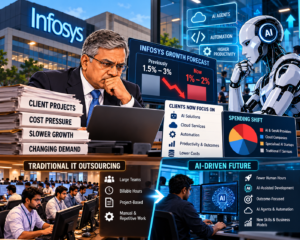
इसका ताजा संकेत Infosys की FY2027 growth guidance में कटौती है। 23 October 2026 को Infosys ने अपने annual revenue growth forecast को 1%-2% कर दिया, जो पहले 1.5%-3% था। कंपनी के North American business में भी दूसरी तिमाही में revenue 1.5% घटा, जो करीब दो साल में उसका सबसे कमजोर प्रदर्शन रहा।
बड़ा सवाल यह है:
क्या यह सिर्फ temporary slowdown है, या AI traditional Indian IT outsourcing model के अंदर से ही उसकी economics बदल रही है?
Infosys ने Growth Forecast क्यों घटाया?
Infosys की guidance cut के पीछे एक नहीं, बल्कि कई factors हैं।
सबसे बड़ा pressure North America से आया है। यह region Infosys की sales का आधे से ज्यादा हिस्सा generate करता है। दूसरी तिमाही में North American revenue 1.5% गिरा, खासकर technology और retail clients द्वारा projects scale back करने से pressure बढ़ा।
लेकिन इसके साथ एक और बड़ा बदलाव हो रहा है।
Clients अब AI, cloud और नए AI-focused technology providers की तरफ अपना spending redirect कर रहे हैं।
इसका मतलब यह नहीं कि companies technology पर कम खर्च कर रही हैं।
बल्कि सवाल यह है कि:
वे technology पर पैसा किस तरह और किस provider के जरिए खर्च कर रही हैं?
AI Traditional IT Outsourcing को कैसे बदल रहा है?
Traditional IT outsourcing का बड़ा हिस्सा billable hours पर आधारित रहा है।
एक company को किसी project के लिए 100 engineers चाहिए।
IT service provider engineers देता है।
जितने ज्यादा engineers और जितने ज्यादा hours, उतना बड़ा contract।
लेकिन AI इस equation को बदल सकती है।
अगर एक developer AI tools की मदद से पहले की तुलना में कहीं ज्यादा code लिख सकता है, testing automate हो सकती है और repetitive support tasks AI agents संभाल सकते हैं, तो client को वही output देने के लिए उतने ज्यादा human hours की जरूरत नहीं पड़ेगी।
यहीं से IT industry के पुराने business model पर pressure आता है।
Reuters के अनुसार clients अब increasingly productivity और outcomes पर focus कर रहे हैं, जबकि traditional outsourcing model largely billable hours से जुड़ा रहा है।
इसका मतलब IT spending खत्म हो रही है?
नहीं।
यह distinction बेहद महत्वपूर्ण है।
Infosys की दूसरी तिमाही में overall revenue 10.7% बढ़कर ₹492.44 billion हुआ और company के deal wins भी पिछले साल के $3.1 billion से बढ़कर $5.2 billion हो गए।
यानी demand पूरी तरह गायब नहीं हुई है।
Problem यह है कि नई demand किस तरह की है और उससे revenue कैसे generate होगा, यह बदल रहा है।
Clients AI transformation चाहते हैं।
Cloud चाहते हैं।
Automation चाहते हैं।
AI agents चाहते हैं।
लेकिन साथ ही वे चाहते हैं कि AI से मिलने वाली productivity का financial benefit उन्हें मिले।
इससे IT companies पर pricing pressure बढ़ता है।
AI से Productivity बढ़ी तो IT companies को नुकसान क्यों?
यह paradox है।
AI से Infosys का employee ज्यादा productive हो सकता है।
लेकिन अगर client कहता है कि:
“पहले इस काम के लिए 100 engineers चाहिए थे, अब AI के कारण 60 engineers काफी हैं।”
तो client का cost कम होगा।
लेकिन IT service provider का traditional billing revenue भी pressure में आ सकता है।
यानी:
Higher productivity ≠ automatically higher outsourcing revenue
यही traditional IT services के लिए सबसे बड़ी challenge है।
Infosys के CFO Jayesh Sanghrajka ने भी pricing pressure और competitive intensity के साथ clients द्वारा AI-led productivity gains का हिस्सा लेने की बढ़ती expectations का उल्लेख किया।
North America की कमजोरी क्यों महत्वपूर्ण है?
Infosys के लिए North America सिर्फ एक geographic market नहीं है।
यह उसका सबसे बड़ा revenue engine है।
इसलिए वहां technology spending में बदलाव का direct impact Indian IT companies पर पड़ता है।
Reuters के अनुसार North American technology और retail clients ने projects को scale down किया है। साथ ही spending का हिस्सा AI, cloud services और US-based AI startups की तरफ जा रहा है।
इससे Indian IT companies के सामने double challenge है:
एक तरफ traditional projects की growth धीमी हो रही है।
दूसरी तरफ नए AI projects के लिए अलग capabilities और business models चाहिए।
क्या AI Startups Indian IT को replace कर रहे हैं?
पूरी तरह नहीं।
लेकिन competition का nature बदल रहा है।
पहले enterprise client के सामने मुख्य विकल्प बड़े IT service providers होते थे।
अब AI-native startups, cloud companies और specialised AI platforms भी enterprise technology stack का हिस्सा बन रहे हैं।
अगर किसी company को traditional application maintenance के बजाय AI agent deployment, model integration या AI-native workflow चाहिए, तो वह traditional outsourcing contract के बजाय specialised AI provider चुन सकती है।
यही वजह है कि Indian IT companies अब AI partnerships, proprietary platforms और industry-specific AI solutions पर ज्यादा जोर दे रही हैं।
Indian IT के लिए असली खतरा “AI” नहीं, Business Model है
AI को केवल job replacement technology के रूप में देखना इस बदलाव को बहुत छोटा करके देखना होगा।
असली disruption यह है कि AI IT services की pricing और delivery model को बदल सकती है।
पुराना model:
People → Hours → Project → Revenue
नया संभावित model:
AI + People → Automation → Outcome → Revenue
अगर यह transition तेजी से होता है, तो बड़ी IT companies को अपनी revenue strategy बदलनी पड़ेगी।
उन्हें ज्यादा employees deploy करने की बजाय ज्यादा automation और measurable outcomes deliver करने होंगे।
क्या इसका असर Indian IT Jobs पर भी पड़ेगा?
संभावित रूप से हां, लेकिन picture simple नहीं है।
Reuters की एक अलग report के अनुसार October में India की overall business activity चार महीने के high पर पहुंची, लेकिन employment growth लगभग रुक गई क्योंकि companies बढ़ते workloads को existing workforce के जरिए handle करने की कोशिश कर रही थीं।
AI adoption के बढ़ने के साथ entry-level और repetitive technology work पर ज्यादा pressure आ सकता है।
Coding assistance, testing, documentation, customer support और routine IT operations जैसे tasks तेजी से automate हो सकते हैं।
लेकिन दूसरी तरफ AI architecture, cybersecurity, cloud, data engineering, AI governance और domain-specific transformation जैसी skills की demand बढ़ सकती है।
इसलिए सवाल यह नहीं है कि:
“AI jobs खत्म करेगी या नहीं?”
बल्कि सवाल है:
“कौन-सी jobs खत्म या छोटी होंगी और कौन-सी नई jobs पैदा होंगी?”
Infosys के लिए अगला रास्ता क्या है?
Infosys के लिए traditional outsourcing से पूरी तरह बाहर निकलना practical नहीं होगा।
लेकिन company को अपने existing client relationships को AI transformation में convert करना होगा।
इसमें तीन बड़े areas महत्वपूर्ण होंगे:
1. AI-led Productivity
Existing projects को AI और automation के जरिए ज्यादा efficiently deliver करना।
2. AI Transformation Services
Clients के business processes में AI agents, automation और intelligent systems deploy करना।
3. Outcome-based Pricing
सिर्फ manpower और hours के लिए charge करने के बजाय business outcomes और productivity gains के आधार पर revenue generate करना।
यही transition Infosys और दूसरी Indian IT companies की future growth story तय कर सकता है।
TCS, HCLTech और Wipro के लिए भी Warning
Infosys का guidance cut केवल Infosys की समस्या नहीं है।
India का IT services sector largely similar global enterprise spending cycles से जुड़ा हुआ है।
इसलिए अगर North America में clients AI-driven productivity के कारण traditional outsourcing contracts को restructure करते हैं, तो इसका असर पूरे sector पर पड़ सकता है।
इसी वजह से TCS, HCLTech और Wipro जैसी companies भी AI agents, enterprise AI platforms और AI transformation services को अपनी growth strategies में तेजी से शामिल कर रही हैं।
Indian IT की अगली competition शायद यह नहीं होगी कि:
“किस company के पास ज्यादा engineers हैं?”
बल्कि:
“कौन-सी company कम human effort में ज्यादा business outcome deliver कर सकती है?”
क्या यह Indian IT के लिए Crisis है या Opportunity?
दोनों।
Short term में AI traditional outsourcing revenue और pricing पर pressure डाल सकती है।
लेकिन long term में वही AI Indian IT companies को ज्यादा valuable technology partners बनने का मौका भी देती है।
अगर Infosys जैसी companies केवल AI tools implement करने तक सीमित रहती हैं, तो margins और pricing पर pressure बना रह सकता है।
लेकिन अगर वे clients के entire business processes को AI-native बनाने में सक्षम होती हैं, तो उनका role outsourcing vendor से बढ़कर AI transformation partner बन सकता है।
यही difference आने वाले वर्षों में सबसे महत्वपूर्ण होगा।
Conclusion: Indian IT का अगला Era “More People” नहीं, “More Intelligence” हो सकता है
Infosys का FY2027 growth forecast घटकर 1%-2% होना एक important warning signal है।
लेकिन इसे केवल “AI की वजह से IT industry खराब हो रही है” कहना सही नहीं होगा।
North America slowdown, weaker project demand, pricing pressure और AI-led spending shift—सभी factors एक साथ काम कर रहे हैं।
फिर भी एक structural बदलाव स्पष्ट दिखाई दे रहा है।
AI traditional IT outsourcing के पुराने economics को challenge कर रही है।
जहां कभी ज्यादा engineers और ज्यादा hours growth का आधार थे, वहां अब automation, AI agents, productivity और measurable outcomes ज्यादा महत्वपूर्ण होते जा रहे हैं।
इस बदलाव में Indian IT companies के सामने सबसे बड़ा सवाल यही है:
क्या वे AI से अपने पुराने outsourcing business को बचाएंगी, या AI का इस्तेमाल करके पूरी तरह नया business model बनाएंगी?
शायद Indian IT का अगला growth cycle इसी सवाल के जवाब से तय होगा।