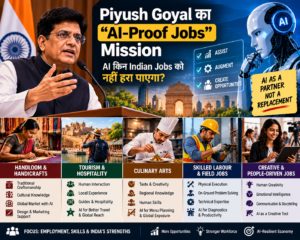
Piyush Goyal का “AI-Proof Jobs” Mission: AI किन Indian Jobs को नहीं हरा पाएगा?
Location: New Delhi, India
Artificial Intelligence अब सिर्फ technology industry का मुद्दा नहीं रह गया है। इसका सबसे बड़ा असर धीरे-धीरे jobs, skills और employment policy पर दिखाई दे रहा है।
इसी बदलते employment landscape के बीच Union Commerce and Industry Minister Piyush Goyal ने एक बड़ा policy idea सामने रखा है। उन्होंने Commerce Ministry को ऐसे “AI-proof professions” identify करने पर काम शुरू करने को कहा है, जहां Artificial Intelligence efficiency बढ़ा सके लेकिन human workers को आसानी से replace न करे।
Goyal ने Germany में Indian researchers और students से बातचीत के दौरान कहा कि India को करोड़ों लोगों के future employment को ध्यान में रखते हुए ऐसे sectors identify करने होंगे जिनमें human skills की value बनी रहे।
यानी सवाल अब यह नहीं है कि AI को रोका जाए या नहीं।
सवाल यह है:
AI के दौर में India किन jobs और sectors में सबसे ज्यादा employment पैदा कर सकता है?
“AI-Proof” से सरकार का मतलब क्या है?
सबसे पहले यह समझना जरूरी है कि “AI-proof” का मतलब ऐसा काम नहीं है जिस पर technology का कोई असर ही न पड़े।
Goyal का focus उन professions पर है जहां AI human productivity को बढ़ाए, लेकिन पूरे human workforce को replace करना मुश्किल हो।
उदाहरण के लिए एक artisan AI का इस्तेमाल product design, online marketing या international customers तक पहुंचने के लिए कर सकता है।
लेकिन final handicraft बनाने में उसकी craftsmanship और human creativity की जरूरत बनी रह सकती है।
यही model government explore करना चाहती है:
AI as an assistant, not necessarily AI as a replacement.
Handloom और Handicraft क्यों बने बड़े examples?
India की traditional economy में handloom और handicrafts का बड़ा role रहा है।
इन sectors में products केवल machines से नहीं बनते। उनमें craftsmanship, cultural knowledge, design traditions और generations से चली आ रही specialised skills शामिल होती हैं।
Goyal ने खास तौर पर कहा कि India’s handicraft और handloom sectors में human skill की ऐसी value है जिसे AI आसानी से replace नहीं कर सकता।
लेकिन इसका मतलब यह नहीं कि इन sectors में AI की जरूरत नहीं होगी।
बल्कि AI यहां अलग तरीके से इस्तेमाल हो सकता है:
- Product design और trend analysis
- Digital marketing
- International customer discovery
- Demand forecasting
- E-commerce
- Inventory management
- Translation और customer communication
यानी artisan का काम वही रह सकता है, लेकिन उसका market AI की मदद से global हो सकता है।
Tourism को India का AI-Resilient Sector क्यों माना जा रहा है?
Goyal ने tourism को भी ऐसे sectors में शामिल किया है जहां India बड़ी employment opportunities create कर सकता है।
Tourism में AI already travel planning, bookings, customer service और recommendations जैसे areas में इस्तेमाल हो रहा है।
फिर भी tourism का बड़ा हिस्सा physical और human interaction पर आधारित है।
एक tourist destination पर:
Guide, chef, hotel staff, driver, local performer, artisan और hospitality worker की भूमिका पूरी तरह digital system से replace करना आसान नहीं है।
इसी वजह से tourism को technology के साथ combine करके employment का बड़ा source बनाया जा सकता है। Goyal इससे पहले भी tourism को largely AI-resilient employment opportunity के रूप में highlight कर चुके हैं।
Culinary Arts भी क्यों महत्वपूर्ण हैं?
Goyal ने culinary arts को भी India की potential strength बताया है।
Food preparation में AI recipes generate कर सकता है, demand predict कर सकता है और restaurants के operations optimise कर सकता है।
लेकिन किसी chef का taste, presentation, regional knowledge और personal creativity अलग value create करता है।
खासकर Indian cuisine की diversity को देखते हुए यह sector domestic के साथ-साथ international employment और exports का भी opportunity बन सकता है।
यानी AI chef को replace करने के बजाय chef को more productive और globally connected बना सकता है।
क्या Skilled Labour अगली बड़ी AI-Proof Economy बन सकता है?
यही इस policy idea का सबसे interesting हिस्सा है।
India में बड़ी युवा population है और traditional skills का विशाल base भी है।
Construction, repair, specialised manufacturing, hospitality, crafts और कई field-based professions में physical execution और human judgement महत्वपूर्ण रहते हैं।
AI इन workers के काम को smarter बना सकता है।
उदाहरण के लिए:
Electrician + AI diagnostics
Technician + AI-assisted troubleshooting
Designer + Generative AI
Artisan + AI-powered global marketing
Tour guide + AI translation
इस model में technology worker की जगह नहीं लेती।
Technology worker की capability बढ़ाती है।
लेकिन क्या सच में कोई Job “AI-Proof” है?
यहां caution जरूरी है।
किसी occupation को permanently AI-proof कहना मुश्किल है।
Technology लगातार बदल रही है और आज जो काम automation-resistant लगता है, उसमें भी future में AI-powered robotics, computer vision या autonomous systems प्रवेश कर सकते हैं।
इसलिए शायद “AI-proof jobs” की बजाय AI-resilient jobs ज्यादा accurate term है।
इसका मतलब होगा:
ऐसे काम जिनमें human creativity, physical presence, social interaction, judgement या specialised craftsmanship की value लंबे समय तक बनी रह सकती है।
दूसरी तरफ Technology Jobs पर Pressure क्यों बढ़ रहा है?
India की IT और technology services industry भी AI disruption का सामना कर रही है।
NITI Aayog की October 2026 roadmap के मुताबिक technology services और customer-experience sectors में AI routine roles को reshape कर सकता है। वहीं सही skilling और reskilling के जरिए नए AI-focused roles भी create किए जा सकते हैं।
इसका मतलब यह नहीं कि AI केवल jobs खत्म करेगा।
कुछ jobs कम होंगी।
कुछ jobs बदलेंगी।
और कुछ बिल्कुल नई jobs पैदा होंगी।
यही reason है कि government का focus सिर्फ job protection नहीं बल्कि job transition पर भी होना चाहिए।
IndiaAI Mission से AI-Proof Jobs तक
India ने AI adoption को रोकने की बजाय उसके लिए infrastructure और ecosystem बनाने पर भी जोर दिया है।
Government का IndiaAI Mission ₹10,371.92 crore के financial outlay के साथ चल रहा है और indigenous foundation-model projects को भी support किया जा रहा है।
इसलिए Goyal का latest proposal AI विरोधी approach नहीं है।
असल strategy कुछ ऐसी दिखाई देती है:
AI adoption + human skills + new employment sectors
यानी India एक तरफ AI में competitive बनना चाहता है और दूसरी तरफ यह भी देखना चाहता है कि AI-led growth employment creation को कमजोर न करे।
क्या Government इन sectors को Incentives देगी?
यह अभी clear नहीं है।
Goyal ने कहा है कि support का model government-led, private-led, people-led और opportunity-led initiatives का combination हो सकता है। हर sector के लिए एक जैसी subsidy या incentive जरूरी नहीं होगी।
इसका मतलब आने वाले समय में अलग-अलग sectors के लिए अलग policy approach देखने को मिल सकती है।
उदाहरण के लिए:
Handloom → Export + Digital Commerce
Handicraft → Global Branding + E-commerce
Tourism → Infrastructure + Hospitality Skills
Culinary → Food Entrepreneurship + Global Market
यह approach traditional sectors को सिर्फ preserve करने के बजाय उन्हें modern economic engines बनाने की कोशिश हो सकती है।
AI-Proof Jobs और “Make in India” का नया Connection
अगर India traditional skills को technology के साथ जोड़ने में सफल होता है, तो इसका फायदा सिर्फ employment तक सीमित नहीं रहेगा।
India अपने:
- Handicrafts
- Textiles
- Handlooms
- Food
- Tourism
- Cultural products
को global markets में ज्यादा aggressively position कर सकता है।
AI यहां manufacturing का replacement नहीं बल्कि global distribution engine बन सकता है।
एक छोटे शहर का artisan AI-powered translation, digital advertising और e-commerce की मदद से दुनिया के दूसरे हिस्से में customer तक पहुंच सकता है।
यानी technology और traditional skills का combination India के लिए नया export model भी बना सकता है।
Global Talent को India वापस लाने की कोशिश
Goyal ने Germany में Indian researchers, engineers और scientists से भी India वापस आने के लिए आवश्यक conditions पर suggestions मांगे।
उन्होंने कहा कि talent को वापस लाने का सवाल केवल money का नहीं है। Research ecosystem, institutional support और innovation environment भी महत्वपूर्ण हैं।
यह AI-proof jobs strategy का दूसरा important pillar हो सकता है।
एक तरफ India traditional workers के लिए employment opportunities तलाश रहा है।
दूसरी तरफ advanced AI, science और technology talent को India में वापस लाने की कोशिश कर रहा है।
यानी strategy के दोनों ends हैं:
Skilled worker + advanced researcher
सबसे बड़ी चुनौती: Skills का Gap
अगर India AI-resilient jobs को growth engine बनाना चाहता है, तो सिर्फ sectors identify करना काफी नहीं होगा।
Workers को नए tools भी सिखाने होंगे।
एक artisan को e-commerce नहीं आता तो global market तक पहुंचना मुश्किल होगा।
एक tourist guide को digital tools और foreign-language AI assistance का इस्तेमाल नहीं आता तो productivity सीमित रहेगी।
एक skilled technician AI diagnostic tools इस्तेमाल नहीं करता तो technology का फायदा अधूरा रहेगा।
इसलिए future employment strategy का core होना चाहिए:
Reskilling + Digital Skills + AI Literacy + Traditional Expertise
क्या AI India में Jobs खत्म करेगा या बदल देगा?
शायद दोनों।
कुछ repetitive roles निश्चित रूप से automation pressure में आएंगे।
लेकिन India के लिए सबसे बड़ा opportunity यह हो सकता है कि AI को mass unemployment की समस्या के रूप में देखने की बजाय mass productivity opportunity बनाया जाए।
अगर एक artisan AI की मदद से पांच गुना ज्यादा customers तक पहुंच सके, एक tourism business ज्यादा international visitors attract कर सके और एक skilled worker technology के जरिए ज्यादा efficient हो सके, तो AI employment को खत्म करने के बजाय उसकी economic value बढ़ा सकता है।
Conclusion: AI से बचने की नहीं, AI के साथ आगे बढ़ने की Strategy
Piyush Goyal का “AI-proof professions” idea India के employment debate को एक नई direction देता है।
सरकार ऐसे sectors identify करना चाहती है जहां technology human worker की replacement नहीं बल्कि productivity multiplier बन सके। Handloom, handicraft, culinary arts और tourism इस strategy के शुरुआती examples हैं।
लेकिन असली challenge “AI-proof jobs” की list बनाना नहीं है।
असली challenge है:
क्या India अपने traditional skills को AI, digital commerce, exports और modern training के साथ जोड़कर लाखों लोगों के लिए future-ready employment बना सकता है?
अगर इसका जवाब हां है, तो India का AI future सिर्फ software engineers और data scientists तक सीमित नहीं रहेगा।
उस future में artisan, chef, tourist guide, technician और skilled worker भी AI economy का हिस्सा होंगे।
और शायद यही India की सबसे बड़ी advantage बन सकती है:
AI की speed + Indian workforce की skill.